

Recipe
Ruining a Great Fish? | How the Final Cut Changes Sashimi's Flavor | The Master's "Perfect Slice"

About "Sashimi"
A master Japanese chef with 50 years of experience explains the knife skills needed to make delicious sashimi. He emphasizes that no matter how good the fish is, it can be ruined by the final cut. He discusses how to slice correctly by paying attention to the fish's grain (fibers), the different slicing methods for fresh vs. aged fish, and common mistakes in slicing, sharing techniques to maximize the ingredient's full potential.
Tips for Making "Sashimi"
-
Knife Skills
- The most important thing is to slice with a strong awareness of the fish's fibers (grain). Slice from a direction where the grain is severed so that the flavor and umami spread instantly when the customer eats it.
-
Slicing Direction
- Do not prioritize ease of cutting; maintain a professional mindset that cares for the diner and slice from the optimal direction from the customer's perspective. Slicing from the tail side is a mistake; cutting from the opposite direction is correct.
-
Fresh vs. Aged Fish
- Fresh fish has firm fibers that offer a crunchy texture, but if it is too tough, it should be sliced thin. Aged fish develops umami and a pronounced grain; chewing through this grain releases the umami and aroma.
-
Plating & Thickness
- Slice so that the tail side, which has more grain, is left for last, allowing the best part—the shoulder (head side)—to be plated beautifully. Decorative or excessive scoring ruins the natural texture and bite of the ingredient.
-
Cutting Fibers
- Cutting across the fibers, as with portioning pufferfish or shaving burdock root, improves the texture. Always cut from the thick end rather than the thin end to slice perpendicular to the fibers.
Detailed Commentary on "Sashimi"
* Content organized by topics from the video.
The Right Cut is More Important Than Aging Fish
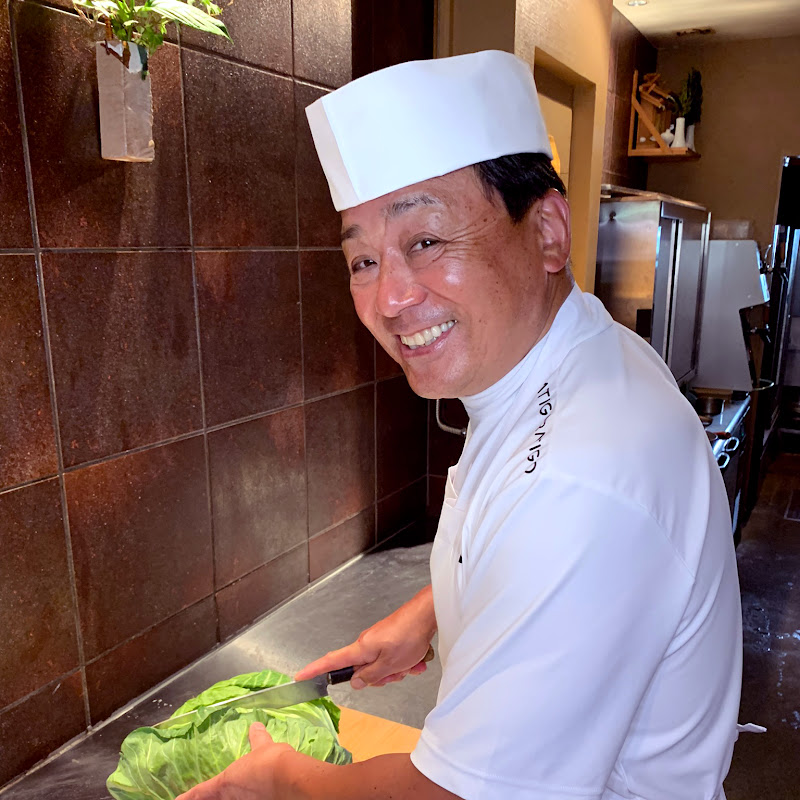
Following up on the previous topic of "aging fish," master chef Toru Wada, with 50 years of experience in Japanese cuisine, passionately discusses "how to use the knife" to make fish taste its best. The master points out that while selecting fresh fish and drawing out umami through aging are important, "correct knife work" is even more critical. People often dismiss this as "too detailed" or "insignificant," but for the diner—especially customers—the final cut dramatically changes the flavor. No matter how high-quality the fish is or how perfectly it has been aged, the wrong knife technique will ruin it. Because the master himself loves to eat, he is deeply committed to the knife skills required to create that "perfect slice."
The Importance of Cutting with the Grain in Mind
What the master calls "correct knife work" means being highly conscious of the ingredient's grain (fibers). Every ingredient has fibers; in freshly caught fish, these fibers are firm, providing a pleasant, crunchy texture. When wild-caught fish is aged, the umami develops, and the grain becomes more pronounced. Chewing through this grain releases the umami compounds and the fish's unique aroma. Therefore, when slicing, the orientation—front, back, left, or right—is incredibly important. The master notes that some young chefs today do not fully understand the importance of these fibers. In an era where wild fish is becoming scarce, knife skills that maximize the potential of the ingredients are needed more than ever.
Prioritize the Customer Over Ease of Slicing
A common mistake among many chefs is "slicing from the direction that is easiest for them." However, the master argues that instead of ease of slicing, the top priority must be "how the customer feels when they put it in their mouth." Slicing from an angle where the fish's flavor and umami spread instantly and the grain is cleanly severed is the foundation of making delicious sashimi and nigiri. Without this, the effort of sourcing fresh fish or spending time aging it is completely wasted. Today, fish is not caught in abundance like in the past; each fish is carefully dispatched and sourced. Therefore, chefs need high-level skills and a professional mindset that cares deeply about the diner.
Why Slicing From the Tail is a Mistake
When slicing sashimi, many chefs cut from the tail side because it is lower and easier to pull the knife through, but the master dismisses this as "absolutely wrong." Slicing this way leaves the best part—the shoulder (head side)—for last, making it impossible to shape beautifully for the customer, resulting in it being served as scraps. Correctly, the knife should be inserted so that the tail side, which has more grain, is left for last. In other words, the correct way is the "reverse" of how it is commonly done. The master explains that such technical differences greatly affect the final taste. He promised to demonstrate this difference using real fish in an upcoming video and have the interviewer, Mr. Asami, do a blind taste test.
The Master's Take on Trendy Decorative Cuts
In the modern sushi industry, decorative cuts like kazari-bocho (decorative scoring) and jabara (accordion cuts) have become trendy. While these visually appealing performances look great in front of customers at the counter, the master holds a strict view on them. He believes that if you truly understand the nature of the ingredient, there is no need for excessive scoring; instead, there is an ideal thickness that tastes best when sliced in reverse. Over-scoring ruins the fish's natural texture and bite. While some argue it helps the soy sauce cling better, the master asserts that every fish—including silver-skinned fish like sardines and horse mackerel—has an optimal cut and thickness for flavor, and discerning this is the true skill of a professional chef.
Different Cuts for Fresh vs. Aged Fish
The way you use the knife differs completely depending on whether the fish is freshly caught (firm) or aged. For example, if you fillet a live flounder into quarters and cut it into 1-cm thick hira-zukuri (standard rectangular slices), the flesh will be too tough and chewy to enjoy. That is why fresh flounder must be sliced paper-thin (usu-zukuri). However, when arranging thin slices into a chrysanthemum pattern (kikkazukuri) on a plate, the master says doing it solely to show off the fish's surface pattern gets "zero points." There is a way to slice that displays the pattern beautifully while still tasting delicious, which he previews he will demonstrate using sea bream (tai) in the next video.
Cutting Fibers: Pufferfish and Burdock Root
In the latter half of the video, specific methods for cutting through fibers are explained using pufferfish tenpane (portioning) and sasagaki (shaved) burdock root as examples. When placing pufferfish on the cutting board with the head facing away and the tail facing you, the grain runs diagonally. Cutting across this grain results in sashimi that is easy to bite and sweet. For large pufferfish weighing over 2 kg, the flesh is portioned into three pieces, rotated counterclockwise to direct the grain away, and sliced from the front with a long blade to cut across the grain. The same rule applies to shaving burdock root. To cut through the fibers of the burdock root for a tender texture, the golden rule is to use a peeler or knife starting from the thick end (the leaf side), not the thin end. Shaving from the thin end runs along the fibers, resulting in a stringy texture.
About 大将に聞いてみた!
大将に聞いてみた!
2.1万人 subscribers ・ 日本料理・和食
* Opens YouTube channel
* Subscriber count is as of article creation and may differ from the current number.
