

Recipe
How to Slice Sushi Toppings: Tuna, Yellowtail & Splendid Alfonsino
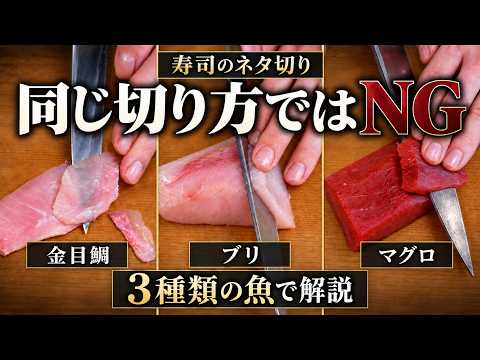
About "Slicing Sushi Toppings (Tuna, Yellowtail & Splendid Alfonsino)"
Slicing sushi toppings (neta) requires different techniques depending on the type of fish and its texture. Key techniques include cutting perpendicular to the connective tissue for tuna, skinning and removing dark meat for yellowtail, and wrapping thin slices for splendid alfonsino. By understanding the knife angle, placement, and ideal size, you can make beautiful, easy-to-eat sushi.
Introduction to 蒼の鮨 sushi-chef ao →
Tips for Making "Slicing Sushi Toppings (Tuna, Yellowtail & Splendid Alfonsino)"
-
Knife Grip
- Place your index finger on the spine, wrap your other fingers around the handle, and rest your thumb near the heel for stability.
-
Connective Tissue
- Check tuna's connective tissue from the side and cut perpendicular to it to ensure a tender texture.
-
Diagonal Slicing
- Keep the knife straight and place the fish diagonally. Keep the front of the block lower and the back higher.
-
Topping Size
- The ideal size is 8.5–9 cm long and 4–5 cm wide, extending slightly past four fingers on your palm.
-
Beveled Edge
- Stand the knife vertically 1 cm before finishing the cut for a 3D look. Skipping this is currently popular for tuna.
-
Reducing Waste
- Slice end pieces thicker and make deep, hidden incisions to butterfly them, maintaining volume while reducing waste.
-
Yellowtail Prep
- Carefully skin the fish, remove bones, and trim the dark meat to prevent discoloration and extend shelf life.
-
Shaping Thin Fish
- For thin toppings like alfonsino, wrap gently from the sides to mold the fish perfectly to the sushi rice.
How to Make "Slicing Sushi Toppings (Tuna, Yellowtail & Splendid Alfonsino)"
- 1
Slicing Tuna
- 2
How to Hold the Knife and Identify Connective Tissue
Place your index finger on the spine of the knife, and lightly wrap your middle, ring, and pinky fingers around the handle. Rest your thumb gently near the heel of the blade for stability. Look at the tuna block (saku) from the side to identify the diagonal connective tissue (suji). Position your knife to cut perpendicular to these lines. Cutting along the grain makes the fish chewy, so identifying the direction of the tissue is crucial.
- 3
Positioning the Fish Diagonally
Instead of angling the knife, place the fish block diagonally on the cutting board and move the knife straight. Adjust the height of the block so the front is lower and the back is higher to ensure smooth slicing. First, trim off the uneven end piece (sutesaku) to square up the block.
- 4
Creating a Beveled Edge (Koba)
Just 1 cm before finishing the cut, stand the knife vertically to create a beveled edge (koba), which adds dimension. While modern sushi chefs often skip this step for tuna, you can choose based on your preference. The ideal size for a sushi topping is 8.5–9 cm long and 4–5 cm wide—roughly the width of four fingers when placed on your palm.
- 5
Making Decorative Cuts (Kakushi-bocho)
Slice the remaining end pieces slightly thicker, then make deep, hidden incisions (kakushi-bocho) to butterfly the piece. This technique maintains the same volume and weight while preventing food waste.
- 6
Shaping the Sushi
Prepare your hands with tezusu (hand vinegar: a 6:4 ratio of water to vinegar) before handling the sushi rice. Align the longest part of the topping with the base of your fingers, and wrap it gently from the sides to shape. If making decorative cuts, skipping the beveled edge (koba) looks cleaner; if not, a beveled edge works well. Adjust flexibly.
- 7
Slicing Yellowtail
- 8
Skinning, Deboning, and Removing Dark Meat
Yellowtail has a different block shape than tuna, requiring a different approach. Insert the knife while visually tracking the boundary between the skin and flesh, then slide the blade to remove the skin. Carefully remove any remaining bones and trim off the dark meat (chiai) to prevent discoloration.
- 9
Adjusting Thickness and Slicing Diagonally
Trim off the uneven end piece. Once the block is at an ideal, uniform thickness, slice the fish diagonally.
- 10
Beveling, Scoring, and Shaping
Finish the cut by standing the knife vertically to create a beveled edge, make light incisions to help it drape over the rice, and shape the sushi.
- 11
Slicing Splendid Alfonsino
- 12
Selecting the Cuts
Use splendid alfonsino with the skin parboiled (yubiki). Remove the tough, fibrous tail and fin muscle (engawa) areas. These trimmed parts can be repurposed for chirashi sushi or rolls.
- 13
Slicing Diagonally
To get the ideal size from a thin block, insert the knife diagonally starting about 2 to 3 finger-widths away from the edge. Aim for the longest side to be about 9 cm, and slide the knife through.
- 14
Beveling and Shaping
Finish the slice with a beveled edge. When shaping, wrap the thin slice gently from the sides to help it mold perfectly to the sushi rice for a beautiful finish.
Detailed Commentary on "Slicing Sushi Toppings (Tuna, Yellowtail & Splendid Alfonsino)"
* Content organized by topics from the video.
Knife Grip and Identifying Tuna Connective Tissue
Before slicing, let's cover the basic knife grip. Place your index finger on the spine of the knife, and lightly wrap your middle, ring, and pinky fingers around the handle. Rest your thumb gently near the heel of the blade for stability. Use this grip as your foundation. Next, prepare the tuna block (saku). Tuna has diagonal connective tissue (suji), which is much easier to see from the side than from the top. By slicing perpendicular to these diagonal lines, you cut through the tough fibers, making the fish tender and easy to eat. Slicing along the grain will result in a chewy, unpleasant texture, so always check the direction of the tissue first.
Why We Slice Diagonally and Tips for Success
The reason we slice sushi toppings diagonally is to maximize their surface area. Slicing straight down yields small pieces, but angling the cut allows you to get longer slices from the same block. However, tilting the knife itself bends your wrist and makes slicing difficult. The trick is to keep your knife straight and place the fish block diagonally on the cutting board. Additionally, adjust the height of the block so the front is lower and the back is higher for smoother knife movement. To clean up the shape, trim off the uneven end piece (sutesaku) first. This piece isn't served to guests but can be eaten yourself.
Creating a Beveled Edge and the Ideal Size
When slicing, stand the knife vertically during the last 1 cm of the cut to create a beveled edge (koba). This adds a three-dimensional look to the topping, though you can also slice straight through without creating one. Skipping the bevel is currently the trend for tuna, but you can choose based on your preferred aesthetic. The ideal size for a sushi topping is 8.5–9 cm long and 4–5 cm wide. When placed on your palm, it should extend slightly past four fingers, which is the easiest size to shape. Lightly hold the fish with your left hand, using your fingertips to feel the thickness and ensure even slices.
Using End Pieces and Shaping Tuna Sushi
You can utilize the remaining end pieces of the block by slicing them slightly thicker and making deep, hidden incisions (kakushi-bocho) to butterfly them. While the appearance changes slightly, the volume and weight remain the same, making this an excellent technique for reducing food waste. When shaping, prepare your hands with tezusu (hand vinegar made with a 6:4 ratio of water to vinegar). Align the longest part of the topping with the base of your fingers, and wrap it gently from the sides. If you made decorative cuts, skipping the beveled edge looks cleaner; if not, keep the bevel. Adjust flexibly based on presentation.
Skinning and Prepping Yellowtail
Next, let's look at yellowtail. Because yellowtail blocks have a different shape than tuna, the slicing technique changes. First, skin the fish. Insert the knife while visually tracking the boundary between the skin and flesh, then slide the blade to remove it. Carefully remove any remaining bones. Whether you keep the dark meat (chiai) is a matter of preference, but since it discolors quickly, we will remove it here to maintain freshness. Trim off the uneven end piece, and once the block is at an ideal thickness, slice it diagonally. Finish with a beveled edge, make hidden incisions to help it drape over the rice, and shape.
Slicing and Shaping Splendid Alfonsino
Finally, let's slice splendid alfonsino. For this, we use fish with parboiled skin (yubiki). Slicing thin fish requires specific techniques. First, remove the tough, fibrous tail and fin muscle (engawa) areas. These trimmings can be repurposed for chirashi sushi or rolls. To get the ideal size from a thin block, insert the knife diagonally starting 2 to 3 finger-widths away from the edge, aiming for a length of about 9 cm. Slide the knife through and finish with a beveled edge. When shaping, wrap the thin slice gently from the sides to help it mold perfectly to the rice for a beautiful finish.
About 蒼の鮨 sushi-chef ao

蒼の鮨 sushi-chef ao
3.2万人 subscribers ・ 和食/寿司
* Opens YouTube channel
* Subscriber count is as of article creation and may differ from the current number.
