

Recipe
First Step to Mastering Italian Cuisine | How to Make Basic Soffritto (Ultimate Guide & Knife Skills)
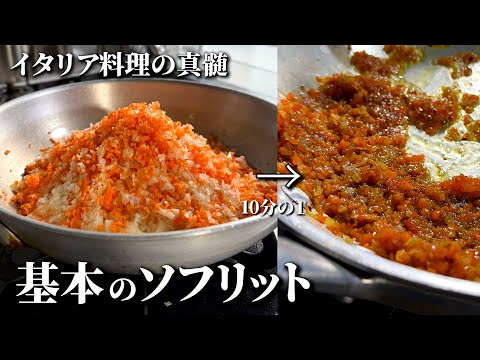
Ingredients
- Onion:approx. 170g (ratio of 3)
- Carrot:approx. 130g (ratio of 2)
- Celery:approx. 60g (ratio of 1)
- Oliveoil: 50 ml or more
- Salt:a pinch
About "Classic Soffritto (Onion, Carrot, and Celery)"
In Italian cuisine, "soffritto" refers to the actual process of slowly cooking aromatic vegetables in fat to build a flavor foundation. This recipe features the classic 3:2:1 golden ratio of onion, carrot, and celery. By finely hand-chopping the vegetables to avoid crushing their fibers, starting on high heat to evaporate moisture, and then cooking slowly on medium heat to caramelize them, you get a clean, sweet, and deeply concentrated flavor. This versatile soffritto serves as the base for bolognese, minestrone, tomato sauce, and many other Italian dishes, and it freezes beautifully.
Introduction to ファビオ飯 /イタリア料理人の世界 →
Video Timestamps
Tips for Making "Classic Soffritto (Onion, Carrot, and Celery)"
-
Ingredient Ratio
- The golden ratio is 3 parts onion, 2 parts carrot, and 1 part celery. Celery has a strong aroma, so adding more will make the mixture taste too grassy.
-
Prep Work
- Using a food processor or chopper breaks the vegetable cells, releasing moisture too early and leaving a grassy odor. Hand-chopping with a knife is highly recommended.
-
Knife Skills
- Slide the knife smoothly back and forth instead of crushing the vegetables. For carrots, slice off a thin piece from the bottom to stabilize it, then slice, julienne, and mince. Use a mandoline if your knife is dull.
-
Moisture Control
- Place chopped vegetables on a paper-towel-lined tray to absorb excess moisture before cooking. This prevents them from steaming in the pan and improves the final texture.
-
Initial Heat
- Heat the pan thoroughly and add the vegetables all at once when it is hot enough to make a sharp sizzling sound. Start on high heat to evaporate moisture; low heat will steam them and dull the flavor.
-
Adding Salt
- Add a pinch of salt right after you start sautéing. This draws out moisture through osmosis and builds a savory foundation for the soffritto.
-
Heat Control
- Once the vegetables soften and the initial moisture evaporates after a few minutes, reduce the heat from high to medium. Cook slowly to caramelize without burning.
-
Cooking Time
- Adjust cooking time based on the dish. Sauté for about 10 minutes for lighter dishes, or 30 minutes to an hour for rich dishes like bolognese. It is done when fine oil bubbles appear around 30 minutes.
-
Oil Quantity
- Use at least 50 ml of olive oil for approximately 170g onion, 130g carrot, and 60g celery.
-
Storage
- To use within a week, cool and refrigerate in an airtight container. For long-term storage, freeze flat in a ziplock bag. You can break off what you need and use it straight from the freezer without thawing.
Ingredients for "Classic Soffritto (Onion, Carrot, and Celery)"
5 items* Tap ingredient names to find on Amazon
How to Make "Classic Soffritto (Onion, Carrot, and Celery)"
- 1
If desired, remove the tough strings from the celery. Finely mince it by sliding the knife back and forth smoothly to avoid crushing the vegetable.
- 2
Slice off a thin piece from the bottom of the carrot to create a flat, stable base. Slice it thinly, cut into matchsticks, and then finely mince. If your knife is dull, use a mandoline slicer to slice it thinly before julienning and mincing.
- 3
If your knife is sharp, mince the onion all at once. If it is dull, make cuts while separating the layers bit by bit to avoid crushing. Since soffritto is cooked for a long time, it does not need to be perfectly minced.
- 4
Line a tray with paper towels and place all the chopped vegetables on top to absorb excess moisture.
- 5
Pour olive oil (50 ml or more) into a pan and heat it until it reaches a temperature where the vegetables will make a sharp sizzling sound when added.
- 6
Add all the vegetables at once and sauté on high heat, tossing to coat them evenly with the oil.
- 7
Add a pinch of salt and continue sautéing on high heat to draw out the moisture.
- 8
After a few minutes, once the vegetables soften, the initial moisture evaporates, and the sizzling sound changes, reduce the heat to medium.
- 9
Continue to cook slowly on medium heat, being careful not to let them burn, to caramelize the sugars in the vegetables. Sauté for 10 to 30+ minutes depending on your intended dish.
- 10
After about 30 minutes, once the moisture is completely gone and fine bubbles of olive oil appear, it is done.
- 11
To store, let it cool completely, then refrigerate (up to 1 week) or freeze (spread flat in a ziplock bag).
Detailed Commentary on "Classic Soffritto (Onion, Carrot, and Celery)"
* Content organized by topics from the video.
Classic Soffritto and the Golden Ratio
Today, we are making soffritto, the absolute foundation of Italian cooking. In some places, soffritto is strictly thought of as sautéed onion, celery, and carrot, but in Italy, the term can mean more than just that. Today, I will show you the most classic version. I use my own golden ratio for these aromatic vegetables: 3 parts onion, 2 parts carrot, and 1 part celery. Celery has a very strong aroma, so adding any more would make the mixture taste too grassy. Using onion as the main base creates sweetness and umami, carrot adds natural sweetness, and celery provides depth of aroma—a balanced combination where each ingredient plays its part.
Why I Don't Use a Food Processor
My biggest priority when making soffritto is to avoid crushing the vegetable fibers. That is why I hand-chop everything carefully with a knife. Of course, if you are prepping in large quantities, using a food processor or a manual chopper is much more efficient, and different chefs have different philosophies. However, chopping them mechanically breaks the vegetable cells, causing moisture to flood out right from the start. This means that instead of sautéing, the vegetables end up steaming, which traps the grassy, raw odors of the aromatics. This blurs the final flavor, so if you want a refined, clean-tasting soffritto, hand-chopping with a knife is the best way to go.
Tips for Cleanly Cutting Celery and Carrots
We will start by cutting the celery. People often wonder if they should peel it, but either way is fine. Vegetable skins hold a lot of aroma, and since soffritto is cooked for a long time, using them unpeeled is quite common. However, removing the strings is satisfying, so feel free to do so if you like. The key when cutting is not to crush the vegetable. Slide the knife smoothly back and forth, slicing in two motions to get a clean mince. For the carrot, slice off a thin piece first to create a flat surface so it does not roll around, then slice it. If your knife is dull, I recommend using a mandoline to slice it all at once, stack the slices, julienne them, and then finely mince.
Onion Prep and the Moisture-Absorbing Trick
Next, we will cut the onion. If your knife is sharp, you can mince it all at once. If it is dull, forcing the blade down will crush the onion, releasing the compounds that make you cry, along with bitterness and grassy odors. The trick is to make cuts while separating the layers bit by bit. Since soffritto is cooked for a long time, you do not need to aim for a perfect, ultra-fine mince. Once all the vegetables are chopped, line a tray with paper towels and place the vegetables on top. No matter how carefully you cut, some moisture will escape. Letting the paper towels absorb this excess moisture prevents the vegetables from steaming in the pan, vastly improving the final result.
Start on High Heat to Evaporate Moisture
Pour olive oil into the pan and heat it. For one onion (approx. 170g), a carrot (approx. 130g), and celery (approx. 60g), you need at least 50 ml of oil. Heat the pan and add all the vegetables at once when it is hot enough to make a sharp sizzling sound. On a home stove, starting on high heat is perfectly fine. Once coated in oil, add a pinch of salt to efficiently draw out the moisture. This salt not only extracts water but also acts as a base to bring out the overall umami of the soffritto. It is crucial to keep sautéing on high heat until the moisture is gone; if the heat is too low from the start, the vegetables will steam, resulting in a muddy flavor.
Reduce to Medium Heat to Caramelize
After a few minutes of sautéing, the vegetables will soften, the initial moisture will release, and the sound will change. At this point, reduce the heat from high to medium. Now that the surface moisture has evaporated, we enter the phase of slowly cooking the vegetables to caramelize their sugars without burning them. As you continue to cook, the vegetables will become jammy and release their sweetness. You can adjust the cooking time depending on the final dish. For a lighter dish, a quick 10-minute sauté might suffice, while for a rich bolognese, you will want to cook it slowly for 30 minutes to an hour to concentrate the umami. Originally, 'soffritto' referred to this very process of slowly cooking aromatics in fat to build a flavor base.
How to Use and Store Your Soffritto
After about 30 minutes of cooking, the moisture will be completely gone, and you will see fine bubbles forming in the olive oil. This is the sign that the aromatics have transformed into pure umami, and your soffritto is complete. This soffritto is incredibly versatile, serving as a rich base for Northern Italian-style tomato sauces, bolognese, stews, and soups (zuppa). Even adding a little to aglio e olio makes it dramatically more delicious. To store, let it cool and keep it in an airtight container in the fridge if using within a week. For long-term storage, spread it flat in a ziplock bag and freeze. It is extremely convenient because you do not need to thaw it—just break off what you need and toss it straight into your stews.
About ファビオ飯 /イタリア料理人の世界

ファビオ飯 /イタリア料理人の世界
131万人 subscribers
* Opens YouTube channel
* Subscriber count is as of article creation and may differ from the current number.
