

Recipe
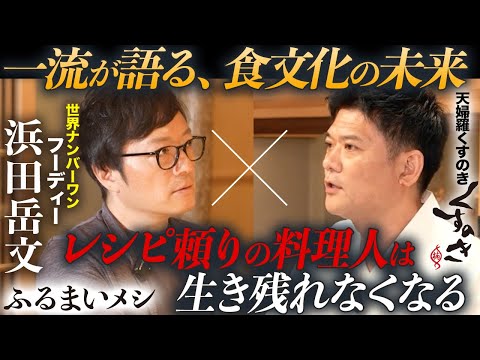
Discussing "Passing Down Techniques" and "The Future of Chefs" with the World's Top Foodie. Don't Become "Urashima Taro"! [Furumai Meshi]
Ingredients
- Shijimiclams, to taste
- Kurumashrimp, 2–3
- Redeggplant, 1
- Fushimisweet peppers, 2–3
- Flour,to taste
- Egg,1
- Water,to taste
- Salt,to taste
- Cookedrice, 1 bowl
- Ripepepper, about 1/4 tsp
About "Kakiage Tenchazuke"
A kakiage tenchazuke featuring a shijimi clam broth base. By gently breaking apart the kakiage (tempura fritter) made with kuruma shrimp, red eggplant, and Fushimi sweet peppers, the umami and aroma of the ingredients sealed inside the batter melt into the broth. A hidden layer of ripe pepper beneath the rice provides a final spicy kick, ensuring a dynamic flavor profile from start to finish.
Video Timestamps
Tips for Making "Kakiage Tenchazuke"
-
Ingredients
- Using carefully selected seasonal ingredients like kuruma shrimp, red eggplant, and Fushimi sweet peppers brings out the rich umami of the kakiage.
-
Cooking Technique
- Breaking the kakiage apart gradually rather than all at once allows the umami to melt from the batter into the broth in stages.
-
Flavor Design
- Hiding ripe pepper beneath the rice creates a refreshing accent at the end, keeping the dish delicious down to the very last drop.
-
Broth
- The broth, which leverages the deep umami of shijimi clams, enhances the aroma of the kakiage ingredients.
Ingredients for "Kakiage Tenchazuke"
10 items* Tap ingredient names to find on Amazon
How to Make "Kakiage Tenchazuke"
- 1
Preparing the Shijimi Clam Broth
Simmer the shijimi clams in dashi stock to extract a deep, savory broth. Adjust the salt level later as you go.
- 2
Preparing the Kakiage Ingredients
Devein the kuruma shrimp, thinly slice the red eggplant, and cut the Fushimi sweet peppers into rounds. Keep the ingredient sizes uniform so they cook evenly when fried.
- 3
Making the Kakiage Batter
Mix the egg into ice-cold water, add the flour, and toss lightly. Do not overmix; leaving the batter slightly lumpy and coarse ensures a light, crispy texture when fried.
- 4
Frying the Kakiage
Coat the ingredients in the batter and fry in oil at 170–180°C (340–355°F). Remove them once the batter is lightly golden and the savory flavors are sealed inside.
- 5
Plating the Dish
Place the rice in the bowl, hiding the ripe pepper underneath it. Top the rice with the hot kakiage, then gently pour the warm shijimi clam broth over it.
- 6
How to Eat and Savor
By breaking the kakiage apart gradually as you eat, the flavors of the kuruma shrimp and red eggplant sealed in the batter melt into the broth in stages. The hidden pepper at the end provides a spicy accent, keeping the dish exciting down to the very last drop.
Food Science
When frying kuruma shrimp or red eggplant as tempura, the batter seals in the moisture of the ingredients, essentially steaming them to concentrate their umami and juiciness. Additionally, the high-temperature oil triggers a thermal reaction (the Maillard reaction), making the batter fragrant and crispy. Furthermore, the rich umami compounds in shijimi clams, such as succinic acid and glutamic acid, combine with the sweetness and umami of the kuruma shrimp, creating a deep flavor profile through a synergistic effect.
Detailed Commentary on "Kakiage Tenchazuke"
* Content organized by topics from the video.
Exquisite Kakiage Tenchazuke with Melting Umami
Chef Kusunoki presents a kakiage tenchazuke built on a shijimi clam broth base. The tempura fritter features kuruma shrimp, red eggplant, and Kyoto's Fushimi sweet peppers. By breaking the kakiage apart gradually, the umami and aroma of the ingredients sealed inside the batter melt into the broth, deepening the flavor as you eat. Furthermore, ripe pepper is hidden beneath the rice, offering a sharp, refreshing kick at the very end. Chef Kusunoki shares his philosophy: "I want the very last drop of the chazuke to be the most delicious," which Hamada highly praises as "refreshing and perfect for summer, the ultimate closing dish." By keeping the pepper hidden initially to introduce a late flavor shift, the dish avoids monotony and remains engaging to the last bite.
Going Abroad and the 'Urashima Taro' Risk
News of Japanese chefs, particularly sushi chefs, earning high salaries and thriving abroad is on the rise. While Hamada views this positively as "proof that their value is recognized," he expresses concern for young chefs who head overseas drawn by high pay without completing proper training in Japan, warning they might return like "Urashima Taro" (out of touch with their homeland). While relocating with the resolve to settle permanently can be a great experience, returning to Japan after a few years often renders that overseas experience obsolete. The primary reason is the difference in ingredient quality. Without daily exposure to top-tier ingredients like those in Japan, chefs cannot master the proper handling of raw materials. Both agree that training in Japan remains crucial for truly deepening one's culinary skills.
Training in Japan and Producer Relations
Today, aspiring chefs from all over the world come to Japan to seriously study sushi, proving that Japan is the ultimate learning ground. In rural Japan especially, chefs have access to exceptional local ingredients and enjoy close proximity to producers and fishermen. Hamada emphasizes that the ideas and technical growth born from direct communication with producers are indispensable. Abroad, fish is typically sourced in bulk through wholesalers, leaving little opportunity to speak directly with producers. In the coming era, rather than just waiting for ingredients to arrive, establishing an interactive (two-way) relationship—where chefs actively request specific harvesting methods or suggest using underutilized fish—will be key to elevating a chef's capabilities.
Passing Down Skills and Defining Gastronomy
When training young apprentices, Chef Kusunoki avoids hand-holding. If an apprentice asks, "How should I prep this fish?" he fires back with, "What do you think?" and bombards them with questions. Apprentices who think for themselves and truly internalize the lessons grow at an overwhelmingly faster rate. Hamada defines the "gastronomy" he values as "thoughtfully conceived cuisine." The simplest test of whether a dish is thoughtfully conceived is whether the chef can logically answer, "Why did you do it that way?" A dish that turns out delicious by chance lacks reproducibility and won't translate to different environments. A chef who can answer any question is proof of endless trial and error and immense effort.
The Importance of Repetition and New Challenges
Hamada points out that many trendy modern restaurants are small-scale venues with few seats, offering fewer opportunities for repetitive practice compared to chefs of the past. To maintain high performance consistently, unaffected by physical condition, mental state, or clientele, solidifying skills through relentless repetition is essential. Chef Kusunoki strongly agrees and has taken on "bettei (alternative venue) operations" as a new challenge. This serves as training to deliver peak performance in unfamiliar environments. Last month, he operated on a yakatabune (traditional houseboat), spending three hours before the event bringing in all his usual equipment for thorough simulations and rehearsals. By placing himself in demanding environments, he continues to hone his skills and adaptability.
A Healthy Work Environment and Initiative
For the past eight years, Kusunoki has maintained an exceptionally healthy and transparent work environment: two days off per week, eight-hour workdays, and under three to four hours of weekly overtime. However, Chef Kusunoki emphasizes that "independent practice is a different story." Just as it is natural for Shohei Ohtani to practice his swing on his own, apprentices who truly excel buy ingredients like tilefish with their own money outside of work hours to practice scaling and cleaning. The era of forcing apprentices to train is over; today, the gap between those who take initiative and those who do not is widening. Chefs who possess the drive to build their own "personal strength" and confidently present it to customers are the ones who will shine in the future.
A Foodie's Vision of Restaurant Sustainability
Hamada's vision for the future is to create an environment where chefs, as creators, can fully unleash their creativity, receive fair recognition from customers, and achieve financial success. He calls this "restaurant sustainability," aiming to pass down this rich food culture across generations. Because he does not cook himself, he feels a pressing concern that if exceptional chefs stop emerging, he won't be able to enjoy delicious food in the future. Even in today's social media-driven world, truly outstanding chefs are not always fairly recognized. This is why Hamada actively engages with the media to build influence, support great chefs worldwide, and contribute to the evolution of food culture.
About くすのきチャンネル
くすのきチャンネル
3,270人 subscribers ・ 天ぷら/和食
* Opens YouTube channel
* Subscriber count is as of article creation and may differ from the current number.
