

Recipe
Toyosu Market: Behind the Scenes of Sourcing at Legendary Tempura Restaurant Kusunoki!
Ingredients
- Megaiabalone
- Kuroabalone
- Sevenbandgrouper (from Owase, Mie Prefecture)
- Shirakawa/ White horsehead tilefish (from Yawatahama, Ehime Prefecture)
- Beltfish/ Tachiuo (line-caught, over 2kg)
- Kurumaprawns (wild-caught from Mikawa)
- Japanesesillago (Kisu)
- Mactraclam (Aoyagi)
- Japanesecockle (Torigai)
- Penshell clam (Tairagi)
About "Tempura"
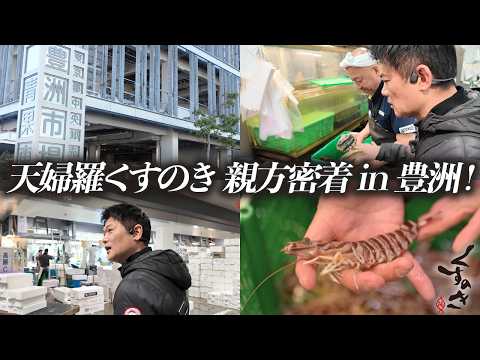
This video follows Chef Tadashi Kusunoki of the legendary tempura restaurant Kusunoki during his daily sourcing at Toyosu Market. Highlighting his trusting relationships and information sharing with fishmongers, it showcases the selection of premium ingredients like abalone, Shirakawa (white horsehead tilefish), beltfish, kuruma prawns, and Japanese sillago. Discover unmatched professional techniques—such as frying beltfish to make its moisture explode inside the batter—and the secrets to bringing out the unique character of wild-caught seafood.
Video Timestamps
Tips for Making "Tempura"
-
Sourcing
- Sourcing at Toyosu Market is not just about buying pre-ordered fish; direct dialogue and information sharing with fishmongers are vital. Building trust ensures a stable supply of top-tier ingredients.
-
Sourcing
- It is crucial to source abalone after they have been placed in a tank to settle into a stress-free state, rather than shipping them immediately after being caught.
-
Sourcing
- Insist on line-caught beltfish weighing over 2kg rather than net-caught ones, as net-caught fish suffer from friction which diminishes their aroma.
-
Technique
- For beltfish tempura, allowing the fish's own moisture to explode inside the batter creates a texture where the flesh melts instantly the moment the crispy batter is broken.
-
Technique
- Since wild-caught seafood changes daily based on water temperature and diet, the essence of culinary skill lies in assessing the daily condition and adjusting the preparation to achieve perfect balance.
-
Quality Control
- Professional purveyors deliver only the finest quality without compromise. If the Japanese sillago does not meet Kusunoki's standards, they must be prepared to declare it out of stock, even if ordered.
Ingredients for "Tempura"
10 items* Tap ingredient names to find on Amazon
- Megaiabalone
- Kuroabalone
- Sevenbandgrouper (from Owase, Mie Prefecture)
- Shirakawa/ White horsehead tilefish (from Yawatahama, Ehime Prefecture)
- Beltfish/ Tachiuo (line-caught, over 2kg)
- Kurumaprawns (wild-caught from Mikawa)
- Japanesesillago (Kisu)
- Mactraclam (Aoyagi)
- Japanesecockle (Torigai)
- Penshell clam (Tairagi)
How to Make "Tempura"
- 1
Enter Toyosu Market after 6:00 AM to speak directly with fishmongers, review the condition of ingredients from previous days, and share feedback.
- 2
Source abalone at Watanabe Shoten. Understand the difference between Megai and Kuro abalone, selecting stress-free shellfish.
- 3
Select premium ingredients like sevenband grouper and high-end Shirakawa (white horsehead tilefish) in the exclusive section of Dairiki Shoten.
- 4
Choose line-caught beltfish weighing over 2kg.
- 5
Source kuruma prawns at Urai Shoten and check the quality of other ingredients like Japanese sillago.
- 6
Assess the condition of the sourced ingredients to determine the optimal cooking method for that specific day.
- 7
Fry the beltfish at a high temperature to make its moisture explode inside the batter, achieving a texture that melts in the mouth when the crispy batter is broken.
Food Science
Carefully selected fresh seafood is rich in umami compounds such as inosinate and glutamate. Additionally, frying beltfish at high temperatures utilizes moisture control to rapidly evaporate water from the batter, alongside temperature zones and heating reactions that promote protein coagulation. This explosive release of moisture from the batter creates a crispy texture while sealing the fish's natural juices and umami inside, maximizing the inherent flavor of the ingredient.
Detailed Commentary on "Tempura"
* Content organized by topics from the video.
Sourcing and Information Sharing at Toyosu
We follow Chef Tadashi Kusunoki of the legendary tempura restaurant Kusunoki as he sources ingredients at Toyosu Market. Arriving after 6:00 AM is his daily routine. Rather than just buying pre-ordered fish, he talks directly with the fishmongers to share feedback, explaining why a certain fish was exceptional. This mutual check-in is how they share vital information. Chef Kusunoki notes, 'I don't just pick and buy fish on my own; the trust and information exchange with the fishmongers is what matters most.' This close communication is the secret to consistently sourcing top-tier ingredients that form the foundation of Kusunoki's cuisine.
Premium Abalone and Shellfish at Watanabe
The first stop is Watanabe Shoten, run by Mr. Watanabe, renowned as Japan's top abalone expert. Here, we are introduced to impressively large Megai abalone and Kuro abalone. These are different species and require completely different preparation. Rather than shipping freshly caught abalone immediately, they are placed in a tank to settle, ensuring they are sourced in a stress-free state. The peak season for shellfish runs from spring, after the cherry blossoms fall, until around October, with quality improving as water temperatures rise. Chef Kusunoki places absolute trust in Watanabe, outsourcing the selection of all shellfish, including Aoyagi (mactra clam), Torigai (Japanese cockle), and Tairagi (pen shell clam). The lively movement of the fresh abalone speaks volumes about its exceptional quality.
Dairiki Shoten and the Rare Shirakawa Tilefish
Next, we head to Dairiki Shoten, where seafood expert Mr. Sawai operates. This is an exclusive area closed to the general public, reserved for storing premium ingredients for top clients. Here, we see sevenband grouper from Owase, Mie, and a massive Shirakawa (white horsehead tilefish) from Yawatahama, Ehime. While typical tempura restaurants often use small fish like flatheads or sillago, Kusunoki luxuriously uses this high-end Shirakawa. A portion large enough for five pieces of sushi is fried whole as tempura. Sawai praises Kusunoki's unique approach: 'Chef Kusunoki fries this beautifully to a medium-rare finish. While the unit cost is high, it's the only way to make it truly delicious.'
Frying Beltfish: Exploding Moisture in Batter
The beltfish (Tachiuo) sourced by Kusunoki is a massive, line-caught specimen weighing over 2kg. Net-caught fish suffer from friction, which diminishes their aroma, so he insists on line-caught fish for their superior fragrance. Frying this beltfish is pure artistry. He prepares a batter that seals in the fish's moisture and drops it into high-temperature oil. By allowing the fish's own moisture to explode inside the batter, clashing with the oil, he achieves a texture where the flesh melts instantly the moment the crispy batter is broken. Sawai praises this as a professional technique impossible to replicate at home: 'Even if we tried, we could never do it. It's a mysterious technique.' Chef Kusunoki adds, 'I want guests to experience the incredible aroma and flavor the exact moment they break the batter.'
Urai Shoten's Prawns and Sillago Selection
Next, we visit Urai Shoten, a specialist in prawns. Kuruma prawns are the only ingredient Kusunoki uses year-round, making Urai an indispensable partner. Here, the uncompromising standards of these professionals are revealed. Urai strictly sorts Japanese sillago by size and origin. If he decides that 'not a single sillago meets the standard for Kusunoki,' he will mark it as 'out of stock' even if there is an order. Chef Kusunoki trusts this judgment completely; if there is no sillago, he relies on his culinary repertoire to delight guests with other dishes. This strong, eight-year relationship of mutual trust and zero compromise ensures only the finest ingredients are served.
Bringing Out the Character of Wild Seafood
Finally, we are introduced to wild kuruma prawns from Mikawa. Chef Kusunoki shares his passion: 'I want to welcome guests with lively ingredients and give them that vitality.' The flavor of wild-caught seafood changes daily depending on water temperature and diet. He asserts, 'Blaming the ocean when a guest says "the fish last time tasted better" is not the essence of culinary skill.' True professional skill lies in assessing the daily condition of the ingredient and adjusting the preparation to achieve perfect balance. This requires extensive prep work before frying, or sometimes, the restraint to leave the ingredient untouched. Finding energy and inspiration at Toyosu Market, Chef Kusunoki continues to perfect his craft to share Japan's incredible food culture with the world.
About くすのきチャンネル
くすのきチャンネル
3,270人 subscribers ・ 天ぷら/和食
* Opens YouTube channel
* Subscriber count is as of article creation and may differ from the current number.
