

Recipe
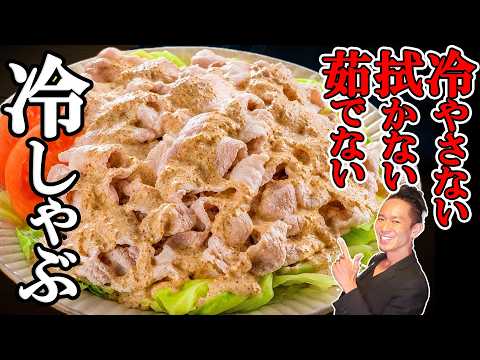
Meat Pro's Mind-Blowing Pork Rei-Shabu: A Game-Changing Method
Ingredients
- 200gpork belly (thinly sliced)
- 1head of lettuce
- Negionion (or scallions), to taste
- [ForAlkaline Shabu-Shabu] 800ml boiling water
- [ForAlkaline Shabu-Shabu] 200ml water (room temperature)
- [ForAlkaline Shabu-Shabu] 1g baking soda (a pinch)
- [ForAlkaline Shabu-Shabu] 1 tsp grated ginger
- [DippingBroth] 100ml water
- [DippingBroth] 3 tsp shiro-dashi
- [DippingBroth] 1 tsp sugar
- [DippingBroth] 1 tsp kombucha (kelp tea powder)
- [DippingBroth] 1 tsp sesame oil
- [SpecialSesame Sauce] 3 tbsp ponzu
- [SpecialSesame Sauce] 2 tsp honey
- [SpecialSesame Sauce] 2 tbsp toasted white ground sesame seeds
- [SpecialSesame Sauce] 1 tbsp mayonnaise
About "Pork Belly Rei-Shabu (Morita-Style Alkaline Shabu-Shabu)"
This "Morita-style rei-shabu" by a meat professional completely redefines the traditional method of boiling pork and chilling it in ice water. By combining pork, boiling water, and room-temperature water in a 1:4:1 ratio, you can achieve a perfect 80°C (176°F) without a thermometer. Cooking the meat gently in alkaline water with baking soda and grated ginger enhances its moisture retention. Instead of chilling the meat, serving it warm over crisp, ice-chilled lettuce creates a wonderful contrast of temperatures and textures. Enjoy it with two special sauces—a kombucha-infused dipping broth and a rich sesame sauce—that bring out the ultimate umami synergy.
Introduction to 予約7年待ち「肉の鬼才」森田隼人の料理研究所 →
Tips for Making "Pork Belly Rei-Shabu (Morita-Style Alkaline Shabu-Shabu)"
-
Temperature Control
- By using a pork to boiling water to room-temperature water ratio of 1:4:1 (e.g., 200g pork, 800ml boiling water, 200ml water), you can achieve exactly 80°C (176°F) without a thermometer. This temperature is key to keeping the meat juicy and tender.
-
Alkalization
- Adding 1g (a pinch) of baking soda per 500g of water shifts the water to alkaline, dramatically increasing the meat's moisture retention. Add the baking soda after turning off the heat.
-
Ginger Effect
- Adding 1 tsp of grated ginger allows its enzymes to break down the meat fibers uniformly, resulting in a much moister texture.
-
Prep
- Bring the pork to room temperature before cooking. This prevents the water temperature from dropping too rapidly, ensuring even cooking.
-
Cooking
- Once the pork is added, let it cook slowly in the residual heat with the stove turned off. Avoid stirring vigorously to prevent the umami from escaping; just gently separate the slices.
-
Serving (No Chill)
- Do not chill the cooked pork in ice water. Simply drain it on paper towels and serve. Chilling solidifies the fat and toughens the meat, so serving it warm over cold lettuce creates a delicious temperature contrast.
-
Lettuce Prep
- Tear the lettuce by hand instead of cutting it with a knife to avoid crushing the cells and preventing oxidation (browning). Soak the torn lettuce in ice water to make it extra crisp.
-
Dipping Broth
- Combining the glutamic acid in kombucha (kelp tea) with the inosinate in pork creates an incredible umami synergy. Keep the dipping broth thoroughly chilled in the refrigerator.
-
Sesame Sauce
- Adding mayonnaise to the sesame sauce emulsifies the ground sesame seeds and prevents separation. The base ratio is 5 parts ponzu to 1 part honey.
Ingredients for "Pork Belly Rei-Shabu (Morita-Style Alkaline Shabu-Shabu)"
16 items* Tap ingredient names to find on Amazon
- 200gpork belly (thinly sliced)
- 1head of lettuce
- Negionion (or scallions), to taste
- [ForAlkaline Shabu-Shabu] 800ml boiling water
- [ForAlkaline Shabu-Shabu] 200ml water (room temperature)
- [ForAlkaline Shabu-Shabu] 1g baking soda (a pinch)
- [ForAlkaline Shabu-Shabu] 1 tsp grated ginger
- [DippingBroth] 100ml water
- [DippingBroth] 3 tsp shiro-dashi
- [DippingBroth] 1 tsp sugar
- [DippingBroth] 1 tsp kombucha (kelp tea powder)
- [DippingBroth] 1 tsp sesame oil
- [SpecialSesame Sauce] 3 tbsp ponzu
- [SpecialSesame Sauce] 2 tsp honey
- [SpecialSesame Sauce] 2 tbsp toasted white ground sesame seeds
- [SpecialSesame Sauce] 1 tbsp mayonnaise
How to Make "Pork Belly Rei-Shabu (Morita-Style Alkaline Shabu-Shabu)"
- 1
Take the pork belly out of the refrigerator before cooking and let it come to room temperature.
- 2
[Make the dipping broth] Mix 100ml water, 3 tsp shiro-dashi, 1 tsp sugar, 1 tsp kombucha (kelp tea powder), and 1 tsp sesame oil well, then chill in the refrigerator.
- 3
[Make the sesame sauce] Mix 2 tbsp ground white sesame seeds, 1 tbsp mayonnaise, 3 tbsp ponzu, and 2 tsp honey. Adding mayonnaise prevents the ground sesame from separating and binds the sauce beautifully.
- 4
[Prepare the lettuce] Tear the lettuce by hand instead of cutting it with a knife, and soak it in cold water (ice water is best) to make it crisp.
- 5
[Make the alkaline shabu-shabu liquid] Bring 800ml of water to a boil in a pot, then turn off the heat and remove it from the stove. Add 200ml of room-temperature water to bring the temperature down to approximately 80°C (176°F).
- 6
Add 1g (a pinch) of baking soda and stir lightly, then add 1 tsp of grated ginger to complete the alkaline shabu-shabu liquid.
- 7
[Cook the pork] Spread out 200g of room-temperature pork belly and add it to the pot. Stir gently just to separate the slices, and let them cook in the residual heat. Avoid stirring vigorously, as this causes the umami to escape. The water temperature will drop to around 68–69°C (154–156°F); cook until the meat turns a light, delicate pink.
- 8
[Plate] Transfer the cooked pork to a tray or plate lined with paper towels to drain slightly. Do not chill it in ice water.
- 9
Arrange the drained lettuce on a plate and place the warm pork on top.
- 10
Serve and enjoy by dipping the pork and lettuce into the dipping broth or sesame sauce.
Detailed Commentary on "Pork Belly Rei-Shabu (Morita-Style Alkaline Shabu-Shabu)"
* Content organized by topics from the video.
3 Game-Changing Rules for Rei-Shabu
As summer approaches, many crave cold pork shabu-shabu (rei-shabu), but have you ever felt that boiling the meat drains away all its flavor? To solve this, meat professional Mr. Morita proposes three new rules: 'don't boil,' 'don't pat dry,' and 'don't chill.' Over the past 20 years, refrigeration, transport, hygiene, and preservation technologies have advanced dramatically, changing the very nature of meat. Thus, our cooking methods must be updated too. This recipe introduces a scientific approach completely different from traditional methods. Based on three themes—the 'rei-shabu equation,' 'alkaline shabu-shabu,' and 'two special sauces'—we share professional techniques so anyone can make incredibly tender, melt-in-your-mouth cold shabu-shabu at home without fail.
The Heat Equation for Perfect Temperature
The most crucial factor in making delicious rei-shabu is temperature. Boiling meat in bubbling water causes the muscle fibers to contract rapidly, making it tough and washing away the umami. Since meat finishes cooking at 65°C (149°F), starting with 80°C (176°F) water—which drops to and maintains around 65°C when the meat is added—is ideal. This is where the 'heat balance equation' comes in. The golden ratio of pork to boiling water to room-temperature water is 1:4:1. For example, combining 200g of pork with 800ml of boiling water and 200ml of tap water (approx. 20°C/68°F) perfectly recreates 80°C water without a thermometer. This precise temperature control is the ultimate secret to keeping the meat juicy and tender.
The Science of Alkaline Water for Tenderness
To make the meat even more tender, we use a scientific approach: 'alkaline shabu-shabu.' The isoelectric point of meat is around pH 5.5, a state where moisture and flavor escape easily. By adding 1g (a pinch) of baking soda per 500g of water, we shift the water to alkaline, dramatically increasing the meat's moisture retention. This is the same principle as adding seaweed (which is alkaline) to shabu-shabu to make it taste better. Additionally, adding 1 tsp of grated ginger is key. The enzymes in ginger help keep the meat fibers uniform, resulting in a much moister texture. Thanks to the dual effect of baking soda and ginger, even budget-friendly cuts of meat turn out incredibly tender and juicy.
Golden Ratios for Two Special Sauces
To elevate the dish, we prepare two distinct sauces: a dipping broth and a sesame sauce. The dipping broth combines 100ml water, 1 tsp sugar, 1 tsp kombucha (kelp tea powder), 1 tsp sesame oil, and 3 tsp shiro-dashi. The glutamic acid in the kelp tea pairs with the inosinate in the pork to create an incredible umami synergy. The sesame sauce blends 3 tbsp ponzu, 2 tsp honey, 1 tbsp mayonnaise, and 2 tbsp ground white sesame seeds. This is based on a 5:1 ratio of ponzu to honey, with mayonnaise added to emulsify the ground sesame and prevent separation. You can add a pinch of chicken bouillon powder or MSG for extra depth. Both sauces are easy to make and multiply the deliciousness of the pork.
Lettuce Tips and Shabu-Shabu Prep
While waiting for the water to heat, prepare the lettuce. Here, French chef Seira Furuya joins as a special guest to share a pro tip. Cutting lettuce with a knife crushes its cells, causing polyphenols to oxidize and turn brown. Therefore, the correct method is to tear it by hand. Tearing prevents discoloration, helps the sauce cling better, and preserves its signature crisp texture. Soaking the torn lettuce in cold water (ideally ice water) allows it to absorb moisture and become incredibly crisp. Preparing and thoroughly chilling the lettuce, which serves as the bed for the dish, is key to tying all the flavors and textures together.
The 80°C Miracle: Achieving Tender Pork
Once prepped, it's time to cook the pork. Bring 800ml of water to a boil, then turn off the heat. Adding 200ml of room-temperature water drops the temperature to exactly 80°C (176°F). Add a pinch of baking soda and 1 tsp of grated ginger, stirring lightly to create the alkaline bath. Add the 200g of room-temperature pork belly all at once with the heat off. The temperature will drop to 68–69°C (154–156°F), gently cooking the meat. The trick is not to stir too vigorously, which washes away the flavor; just gently separate the slices. The collagen in the pork fat melts, transforming the meat into an incredibly tender, melt-in-your-mouth texture.
Tasting: Warm Pork Meets Crisp, Cold Lettuce
Once the pork turns a delicate pink and is gently cooked through, transfer it to a paper-towel-lined tray to drain. The most important rule of this recipe is *not* to chill the meat in ice water. Chilling solidifies the fat and contracts the muscle fibers, making it tough. Instead, serve the warm pork directly over the ice-chilled lettuce. Eating the warm meat and cold lettuce together offers a wonderful contrast of temperatures and highlights the meat's incredible tenderness. The pork is amazingly moist and melts in your mouth. Additionally, because it cooks slowly in residual heat, no scum forms in the water. With this scientific approach, your home-cooked rei-shabu will rival restaurant-quality dishes.
About 予約7年待ち「肉の鬼才」森田隼人の料理研究所
予約7年待ち「肉の鬼才」森田隼人の料理研究所
17.1万人 subscribers ・ 和牛・肉料理
* Opens YouTube channel
* Subscriber count is as of article creation and may differ from the current number.
