

Recipe
[Behind the Scenes] Making Japan's Food Industry World-Class! Inside Kusunoki, the Pinnacle of Tempura
Ingredients
- Tempuraingredients (white fish, etc.)
- Waterdropwort (seri)
- Lotusroot
- Rice
- Tentsuyu(tempura dipping sauce/glaze)
- Wineand champagne (as seasoning)
- Salt
- Fryingoil
About "Tempura (Full prep including Bara Tendon)"
The second part of our behind-the-scenes look at the pre-opening prep at legendary tempura restaurant Kusunoki. We explore the master's culinary philosophy and team building, including using wine as seasoning, a dedication to tea, staff meal evaluations for young chefs, and the prep leader's communication secrets. It also highlights the new course menu at the Nakameguro branch, showcasing the artisan spirit passed down to the next generation.
Video Timestamps
Tips for Making "Tempura (Full prep including Bara Tendon)"
-
Seasoning Choice
- Avoid squeezing citrus directly as it overpowers the ingredients; instead, use the delicate acidity of wine or champagne.
-
Oil Temp Control
- Be careful not to let the oil temperature rise too high when frying final ingredients like water dropwort.
-
Sauce Balance
- Keep the sauce lighter and use a larger amount so the rice absorbs it properly, making it easier to eat.
-
Cutting Technique
- Unify the size of all ingredients to balance the appearance, texture, and cooking difficulty.
-
Training Chefs
- Use staff meals as a training ground and gateway for young chefs to receive direct feedback on their frying skills.
-
Team Building
- Appoint leaders who communicate well and leverage team strengths to create a positive, supportive work environment.
-
Artisan Mindset
- Prioritize mindset and attitude over mere technique to achieve high performance and create exceptional dishes.
Ingredients for "Tempura (Full prep including Bara Tendon)"
8 items* Tap ingredient names to find on Amazon
How to Make "Tempura (Full prep including Bara Tendon)"
- 1
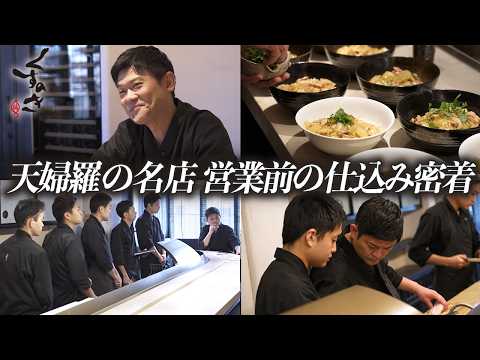
A young chef prepares a 'Bara Tendon' (mixed tempura rice bowl) for the staff meal, cutting ingredients to size and managing the oil temperature while frying.
- 2
When frying the final ingredients (such as water dropwort), be careful not to let the oil temperature rise too high.
- 3
Keep the tentsuyu sauce on the lighter side and pour a generous amount over the rice to encourage absorption.
- 4
The master tastes the staff meal and provides feedback on oil temperature, sauce balance, and ingredient size consistency.
- 5
The young chef continues practicing to improve their skills based on the feedback.
Food Science
Proper oil temperature control is crucial for efficiently evaporating moisture from the tempura batter while retaining the internal moisture of the ingredients to keep them juicy. Additionally, pouring a generous amount of lighter tentsuyu sauce over the rice facilitates moisture absorption (moisture control), creating an exquisite balance where the oil of the tempura, the rice, and the sauce harmonize perfectly.
Detailed Commentary on "Tempura (Full prep including Bara Tendon)"
* Content organized by topics from the video.
Wine as Seasoning and the 'Nommelier' Philosophy
At Kusunoki, wine and champagne are treated as essential seasonings. The owner avoids squeezing citrus fruits like lemon or sudachi directly onto the food, as excessive acidity can disrupt the balance of flavors and mask the natural sweetness of the ingredients. However, certain items like white fish benefit from a touch of acidity, which is where the delicate acidity of wine and champagne serves as the perfect seasoning. Referring to himself not as a sommelier but as a 'nommelier' (a play on words meaning 'one who drinks to taste'), the owner constantly explores pairings between alcohol and food. For guests who do not drink alcohol, the restaurant is also elevating its tea selection, even planning a staff trip to Taiwan to experience tea leaf harvesting and selection firsthand.
The Artisan's Mindset: More Important Than Skill
For those interested in joining Kusunoki, the owner emphasizes that one's 'mindset' (stance) is far more important than 'technique' (how to do it). Technical skills can be learned over time, but cultivating the right attitude and mental state is what drives high performance and leads to extraordinary creations. The owner himself never settles, constantly refining his own mindset through new experiences, such as the upcoming training trip to Taiwan. Through this channel, he hopes to share not just cooking techniques, but the passion and way of life of a true artisan in a realistic and engaging way.
The Gateway to Frying: Staff Bara Tendon
At Kusunoki, staff meals serve as a valuable training ground for young chefs. In this episode, the owner tasted a 'Bara Tendon' prepared by an apprentice aiming to become a main fryer. Passing this staff meal test is the first step toward advancing to the formal examinations to be recognized as a fryer. Regarding this attempt, the owner pointed out that the oil temperature rose too high when frying the final ingredient, the water dropwort. He also offered specific advice on the sauce, saying, 'If you make the sauce slightly lighter and pour more of it, the rice will absorb it better, making it easier to eat. The tempura on top itself is quite good.' He also noted that the lotus root was cut too large compared to the other ingredients, urging further practice to improve consistency.
Prep Leader Sekita's Communication Secrets
Sekita, who has been with the company for three years, currently serves as the prep leader at the Nakameguro branch. The owner appointed him to this leadership role not just for his high technical skills, but because he is excellent at leveraging his team's strengths and excels at communication (Hou-Ren-So: Report, Contact, Consult). Sekita always makes sure to form his own opinion before consulting the master. After carefully gathering input from those around him, he presents his ideas constructively, saying, 'This is my thought, but others are suggesting this. What do you think?' The owner firmly believes that a good working environment is crucial, stating, 'If our employees are not happy, we cannot make our customers happy.' This open communication fosters a wonderful atmosphere during service and leads to high customer satisfaction.
A Lifelong Vision: Making Japan's Food No. 1
The owner's grand vision in life is to make Japan's food industry the best in the world. The standards of French, Italian, Chinese, and Japanese cuisine in Japan are world-class, with international guests constantly praising the techniques and sensibilities of Japanese chefs. The owner strongly believes that everyone involved in this wonderful industry—not just the chefs in the kitchen, but also the administrative and cleaning staff—should thrive both economically and environmentally. To achieve this, the industry must communicate its value properly and receive fair compensation, thereby elevating the status of the entire food and beverage sector. This is the passionate, forward-looking goal the owner wishes to dedicate his life to achieving.
New Nakameguro Course: The Apprentice-Led Sho
The Nakameguro branch is completely renewing its course system. Previously, it was a 2.5-hour full course starting simultaneously for 12 guests. The new system allows guests to choose from four start times (5:00 PM, 6:00 PM, 7:00 PM, and 8:00 PM) and transitions to a small-group format with a maximum of 4 guests per party. This brings guests closer to the fryer, offering a more private, exclusive feel. The course volume has been made more compact, allowing guests the flexibility to customize their meal with additional items. This reform is made possible by the steady growth of the owner's apprentices. In the newly launched 'Sho Course,' Sekita, a fryer officially recognized by the master, will lead the kitchen, supported by the energetic young talent, Haru-kun.
About くすのきチャンネル
くすのきチャンネル
3,270人 subscribers ・ 天ぷら/和食
* Opens YouTube channel
* Subscriber count is as of article creation and may differ from the current number.
