

Recipe
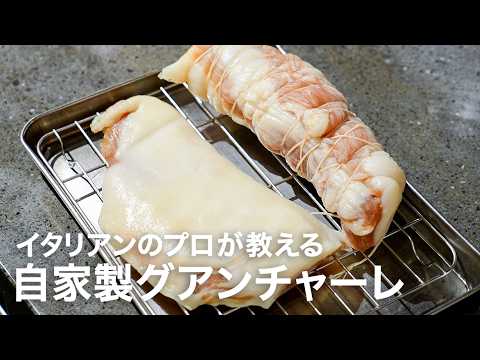
Homemade Guanciale Made with Pork Jowl by an Italian Chef [Italian Professional Training Course Vol. 196]
Ingredients
- Porkjowl block: 1 kg
- Salt:20 g
- Sugar:4 g
- (ForCarbonara) Guanciale: to taste
- (ForCarbonara) Garofalo Spaghetti 1.7mm: to taste
- (ForCarbonara) Egg yolk: 20 g
- (ForCarbonara) Parmigiano-Reggiano: 20 g
- (ForCarbonara) Heavy cream: 20 g
- (ForCarbonara) Black pepper: to taste
About "Homemade Pork Jowl Guanciale & Carbonara"
Chef Ogura of the Italian restaurant 'Regalo' in Sangubashi, Tokyo, shares how to make homemade guanciale using pork jowl (tontoro). Since pork cheek in Japan is often trimmed of too much fat, fat-rich pork jowl is used as an excellent alternative. The pork is rubbed with salt and sugar, cured in the refrigerator for one week, and then dried for over three weeks to create authentic guanciale. The chef compares three different drying methods to test the differences in the final result. The finished guanciale is then used to make a carbonara, resulting in a dish with a crispy texture and rich, intense umami.
Introduction to 小倉知巳のイタリアンプロ養成講座 →
Tips for Making "Homemade Pork Jowl Guanciale & Carbonara"
-
Ingredient Choice
- Since Japanese pork cheek is often trimmed of too much fat, fat-rich pork jowl (neck) is used as an alternative.
-
Seasoning
- The golden ratio is 20 g of salt and 4 g of sugar per 1 kg of pork jowl, the same ratio as pancetta.
-
Prep (Curing)
- Mix salt and sugar, rub evenly over the pork jowl on plastic wrap, and wrap tightly. No need to change the wrap during curing.
-
Curing Time
- Leave in the refrigerator for 1 week to draw out moisture.
-
Drying Comparison
- Tested 3 methods: 1) air-drying on a tray, 2) stacking 2 blocks and wrapping tightly with twine, 3) wrapping in a dehydrating sheet. Air-drying yielded the best results.
-
Dehydrating Sheets
- It is effective to start with a dehydrating sheet, change it once, and finish by air-drying in front of the refrigerator fan.
-
Twine Shaping
- Since pork jowl is thin, stack 2 blocks to form layers and wrap very tightly, mimicking commercial pancetta or bacon rolls.
-
Drying Time
- Start drying after 1 week of curing. It reaches a good state by day 10 and near-perfect by day 14. Dry for over 3 weeks total.
-
Raw Consumption
- Though eaten raw in Italy, raw consumption is not recommended for home cooking in Japan due to safety. Use in cooked dishes like pasta.
-
Storage
- Store the finished guanciale in the freezer for easy use.
-
Carbonara: Prep
- Cut guanciale into slightly large pieces for presence in the pasta, balancing lean and fatty pieces.
-
Carbonara: Sauce
- Mix 20 g egg yolk, 20 g Parmigiano-Reggiano, and 20 g heavy cream. Cream is increased from the usual 15 g to 20 g for a richer finish.
-
Carbonara: Searing
- Do not add olive oil; cook the guanciale over low heat to slowly render out the fat.
-
Carbonara: Method
- Toss the pasta once to lower the temperature before adding the eggs. Stir gently with a spatula using only residual heat until creamy.
-
Carbonara: Finish
- Plate the pasta and finish with a generous amount of black pepper.
Ingredients for "Homemade Pork Jowl Guanciale & Carbonara"
9 items* Tap ingredient names to find on Amazon
How to Make "Homemade Pork Jowl Guanciale & Carbonara"
- 1
[Guanciale: Curing] Lightly mix 20 g of salt and 4 g of sugar in a bowl.
- 2
Place the pork jowl block on a sheet of plastic wrap and rub the salt and sugar mixture evenly all over it by hand.
- 3
Wrap the pork jowl tightly with the plastic wrap and leave it in the refrigerator for 1 week to draw out moisture (no need to change the wrap during this time).
- 4
[Guanciale: Drying] After 1 week, remove it from the refrigerator and thoroughly wipe off any excess moisture on the surface with paper towels.
- 5
Dry using one of the following three methods: 1) Place directly on a tray to air-dry in the fridge, 2) Stack two blocks, wrap them tightly with butcher's twine, and dry in the fridge, or 3) Wrap in a dehydrating sheet (Pichit sheet) and dry in the fridge (change the sheet once, then finish by air-drying where the fridge's fan blows).
- 6
Around day 14 of drying (over 3 weeks total in curing/drying), when the lean parts blend in and the edges become crisp, it is ready. Store in the freezer.
- 7
[Carbonara] Cut the guanciale into slightly large pieces, ensuring a good balance of lean meat and fat.
- 8
In a bowl, thoroughly mix 20 g of egg yolk, 20 g of Parmigiano-Reggiano, and 20 g of heavy cream to make the egg mixture.
- 9
Boil the Garofalo 1.7mm spaghetti in salted water for 7 and a half minutes.
- 10
Without adding olive oil to the pan, cook the guanciale over low heat to slowly render out the fat.
- 11
30 seconds before the pasta is done, add some pasta water to the pan, then add the pasta.
- 12
Toss the pan once to lower the temperature, then add the egg mixture and stir gently with a rubber spatula using only residual heat until it thickens.
- 13
Plate the pasta and finish with a generous amount of freshly cracked black pepper.
Detailed Commentary on "Homemade Pork Jowl Guanciale & Carbonara"
* Content organized by topics from the video.
The Challenge: Homemade Pork Jowl Guanciale
This professional training course is brought to you by Chef Tomomi Ogura of the Italian restaurant 'Regalo' in Sangubashi, Tokyo. This time, in response to many viewer questions about how to make guanciale, we are taking on the challenge of making it at home using pork jowl (tontoro). This recipe was actually inspired by a highly successful batch made by staff member Tommy for staff meals. In Japan, pork cheek (the traditional cut for guanciale) is often trimmed of too much fat, so we are using pork jowl—a fat-rich cut from the neck—as an alternative. Although the chef is slightly tipsy from drinking a bit too much during the first video shoot, he generously shares his professional techniques and attention to detail.
Curing Pork Jowl with a Golden Ratio
The pork jowl used is a standard cut sourced from a supplier. We season it using a golden ratio of 20 g of salt and 4 g of sugar per 1 kg of pork jowl. This is the exact same ratio used in our previously featured homemade pancetta recipe. After lightly mixing the salt and sugar in a bowl, place the pork jowl on plastic wrap and rub the mixture thoroughly all over it by hand. Wrap it tightly and leave it in the refrigerator for one week without changing the wrap, even as moisture begins to release. Viewers often ask if they should change the wrap, but there is no need to do so during the curing stage. Drawing out the moisture over this week is the crucial first step to making delicious guanciale.
One Week Later: Three Drying Methods
Exactly one week has passed since the curing process began. When removed from the refrigerator, the pork jowl has firmed up nicely as moisture has been drawn out. First, thoroughly wipe off any excess surface moisture with paper towels. Next is the drying process, where we will test and compare three different methods to see how they affect the final result. The first is simply placing it on a tray to air-dry, the second is wrapping it tightly with butcher's twine, and the third is using a dehydrating sheet (Pichit sheet). While the basic drying process is similar to making pancetta, this comparison of shapes and drying methods promises fascinating results.
Twine Shaping and Dehydrating Sheets
Since pork jowl is a relatively thin cut, for the twine-wrapped version, we stack two blocks to form layers and wrap them together as tightly as possible. This shaping is inspired by commercial pancetta or bacon rolls. For another method, we use a dehydrating sheet (Pichit sheet), which is incredibly useful for removing excess moisture and odors through osmotic pressure while locking in umami. The chef shares a fun anecdote: Okamoto Co., Ltd., the manufacturer of these sheets, are regulars at Regalo and often leave some sheets behind when they visit. The pork jowls prepared with these three methods are placed back in the refrigerator to dry slowly.
Day 10 Progress and the First Taste Test
Ten days have passed since the drying process began. The twine-wrapped block is in excellent condition, and the one wrapped in the dehydrating sheet had its sheet changed once to draw out more moisture. At this stage, the simple air-dried version seems to have the best texture. The chef cuts a small piece from the end of the twine-wrapped guanciale and sears it in a pan. Because the moisture has been thoroughly removed, it develops a beautiful, crisp crust. Upon tasting, the chef exclaims, 'This is incredibly delicious! Spot on!' He is thrilled by the high quality. The balance of fat and lean meat unique to pork jowl is outstanding, and the saltiness is perfectly balanced, showing true guanciale character even at this stage.
Day 14 Aging and Safety of Raw Consumption
Another four days have passed (14 days since drying began). The raw-looking lean parts have blended in, and the edges have dried to a crisp, indicating it is in nearly perfect condition. The version using the dehydrating sheet still has a bit of moisture and looks slightly shiny, suggesting that starting with the sheet and finishing with air-drying in front of the refrigerator fan is the best approach. Here, the chef discusses how guanciale is eaten in Italy. While it is sometimes sliced and eaten raw in Italy because the curing and aging process inhibits bacterial growth, raw consumption is not recommended for home cooks in Japan due to safety standards. It is best enjoyed cooked in dishes like pasta to savor its rich, concentrated umami.
Making Carbonara with 3-Week Aged Guanciale
After drying for over three weeks in total to completely remove the moisture, we use the guanciale (which was stored in the freezer) to finally make carbonara. The guanciale is cut into slightly large pieces so it stands out in the pasta, ensuring a balanced mix of lean and fatty pieces. Next, we prepare the egg mixture. In a bowl, combine 20 g of egg yolk, 20 g of Parmigiano-Reggiano, and 20 g of heavy cream. While 15 g of cream is standard, we use 20 g here for a richer, more appealing flavor. Whisk these together and set aside. For the pasta, we use Garofalo 1.7mm spaghetti, boiled for 7 and a half minutes.
The Ultimate Carbonara and Orvieto Wine
Carbonara is defined by the harmony of pork fat, pasta water, egg, and cheese. Without adding olive oil, cook the guanciale over low heat to slowly render its fat. Add pasta water 30 seconds before the pasta is done, toss the pasta in, and shake the pan once to lower the temperature. This is a crucial professional technique to prevent the eggs from scrambling when the egg mixture is added. Once the egg mixture is in, stir gently with a rubber spatula using only residual heat until a creamy sauce forms. Plate and top with plenty of black pepper. Tasting it, the chef praises, 'The guanciale is incredibly crispy and crunchy—the ultimate ingredient!' It pairs beautifully with a white wine from Orvieto, Umbria (Palazzone late harvest, 11% ABV), a crowd-pleasing combination that even staff members who aren't big drinkers highly recommend.
About 小倉知巳のイタリアンプロ養成講座
小倉知巳のイタリアンプロ養成講座
24.8万人 subscribers ・ イタリアン
* Opens YouTube channel
* Subscriber count is as of article creation and may differ from the current number.
