

Recipe
#124 Collaboration with Chef George: Reimagining Paul Bocuse's Classic Dish with Kanazawa Whelk—Tasting Exquisite Gastronomy | Akihiko Hoshino
Ingredients
- Seabass: 300g
- Eggwhites: 270g
- Heavycream: 150g
- Butter:120g (softened at room temperature)
- Salt:6g (for mousseline)
- Garlic:2 cloves (for purée)
- Milk:to submerge (for purée)
- Salt:a pinch (for purée)
- Garlicpurée: approx. 50g (to add to mousseline)
- Whelk(Japanese ivory shell): 4
- Salt:0.5% of total weight (for seasoning whelk)
- Oliveoil: to submerge (for confit)
- Thyme:to taste (for confit)
- Riceflour: to taste (for meunière)
- Butter:to taste (for meunière)
- Garlic(minced): to taste (for meunière)
- Parsley(minced): to taste (for meunière)
- Shallots(minced): to taste (for meunière)
- Thyme:to taste (for meunière)
- Watercress:to taste (for sauce)
- Parsley:to taste (for crust)
- Microwatercress: to taste (for garnish)
About "Whelk Confit and Sea Bass Mousseline with Sauce Cressonnière"
This gastronomic dish reimagines Paul Bocuse's classic specialty (originally frog legs and carp quenelles) using fresh whelk and sea bass sourced from Kanazawa's Omicho Market. The sea bass mousseline is infused with garlic purée and steamed at 90°C, while the whelk is cooked to incredibly tender perfection via a low-temperature confit at 70°C. To finish, the whelk is dusted with rice flour and pan-fried meunière-style for added texture, then paired with a vibrant watercress sauce. In this special collaboration with Chef George, the chefs also dive deep into their culinary philosophies and approach to ingredients.
Introduction to 星野晃彦シェフ Teruhiko Hoshino →
Tips for Making "Whelk Confit and Sea Bass Mousseline with Sauce Cressonnière"
-
Prep
- Parboil the whelks in boiling water for about 30 seconds to remove excess fat, impurities, and odors, while also sterilizing them. Shock in ice water, crack the shells, discard the viscera, clean the meat, and cut into 6–7g bite-sized pieces.
-
Prep
- For the garlic purée, blanch sliced garlic 3 times starting from cold water to remove harshness. Simmer in milk with a pinch of salt for about 10 minutes until soft enough to crush by hand, then blend into a purée.
-
Heat control
- Confit the whelk at a low temperature of 70°C for 1 hour. Since shellfish toughens when overcooked, this low-and-slow method relaxes the fibers to ensure a tender texture, similar to a 'mi-confit' (half-confit) approach.
-
Heat control
- For the sea bass mousseline (flan), spread the mixture to a thickness of 7 mm on an OPP-lined baking sheet. Steam-bake in an oven set to 90°C (vapeur) for 15 minutes to gently set using the coagulating power of the eggs.
-
Plating & Shaping
- Cut the steamed flan into rounds using a 5 cm ring mold, top with a matching parsley crust, and brown under a salamander. The ideal thickness is exactly 7 mm; a difference of just a millimeter affects the overall style and beauty.
-
Mousseline Prep
- Blend 300g of sea bass and salt in a food processor until highly cohesive. Gradually blend in egg whites, heavy cream, and room-temperature butter. The mixture should be liquid. Pass through a chinois (tamis) to smooth, then mix in 50g of garlic purée.
-
Finishing
- Dust the confit whelk with rice flour instead of wheat flour. Gently warm in foaming butter, then add minced garlic, shallots, and parsley to finish meunière-style, creating a light and crispy texture.
Ingredients for "Whelk Confit and Sea Bass Mousseline with Sauce Cressonnière"
22 items* Tap ingredient names to find on Amazon
- Seabass: 300g
- Eggwhites: 270g
- Heavycream: 150g
- Butter:120g (softened at room temperature)
- Salt:6g (for mousseline)
- Garlic:2 cloves (for purée)
- Milk:to submerge (for purée)
- Salt:a pinch (for purée)
- Garlicpurée: approx. 50g (to add to mousseline)
- Whelk(Japanese ivory shell): 4
- Salt:0.5% of total weight (for seasoning whelk)
- Oliveoil: to submerge (for confit)
- Thyme:to taste (for confit)
- Riceflour: to taste (for meunière)
- Butter:to taste (for meunière)
- Garlic(minced): to taste (for meunière)
- Parsley(minced): to taste (for meunière)
- Shallots(minced): to taste (for meunière)
- Thyme:to taste (for meunière)
- Watercress:to taste (for sauce)
- Parsley:to taste (for crust)
- Microwatercress: to taste (for garnish)
How to Make "Whelk Confit and Sea Bass Mousseline with Sauce Cressonnière"
- 1
[Garlic Purée] Thinly slice the garlic, place in a pot with cold water, bring to a boil, and drain. Repeat this blanching process (blanchir) 3 times.
- 2
Pour enough milk over the blanched garlic to submerge it, add a pinch of salt, and simmer gently for about 10 minutes until soft enough to crush with your fingers. Blend the simmered garlic into a smooth purée.
- 3
[Sea Bass Mousseline] Fillet the sea bass into three pieces and weigh out 300g of flesh (any trimmings can also be used for the mousseline).
- 4
Place 300g of sea bass flesh and 6g of salt in a food processor (Robot Coupe) and blend until it becomes highly cohesive and sticky.
- 5
Gradually add 270g of egg whites, 150g of heavy cream, and 120g of room-temperature butter in order, blending continuously (it is normal for the mixture to be quite liquid at this stage).
- 6
Pass the mixture through a chinois (fine-mesh strainer) to tamis (sift/strain) and make it perfectly smooth.
- 7
Add about 50g of the garlic purée to the strained mixture and whisk until evenly combined.
- 8
Pour the mixture onto a baking sheet lined with an OPP sheet, and use a palette knife to spread it evenly to a thickness of exactly 7 mm.
- 9
Cover the baking sheet and steam-bake in an oven set to 90°C (vapeur) for 15 minutes to set.
- 10
[Whelk Confit] Blanch the live whelks in boiling water for about 30 seconds to parboil, then immediately shock them in ice water.
- 11
Crack open the shells with a tool to extract the meat. Discard the viscera (liver) and clean only the muscular meat. Cut the meat in half and slice into bite-sized pieces (about 6–7g each).
- 12
Place the whelk meat in a vacuum bag and season lightly with salt (about 0.5% of the total weight). Add thyme and enough olive oil to submerge, then vacuum-seal the bag.
- 13
Cook in a water bath at a low temperature of 70°C for 1 hour to confit.
- 14
[Finishing & Plating] Cut the steamed flan into rounds using a 5 cm ring mold (cercle). Top with a parsley crust cut to the same size, and brown the surface under a salamander broiler until fragrant.
- 15
Dust the confit whelk with rice flour. Gently warm it in foaming butter, then add minced garlic, shallots, parsley, and thyme to finish it meunière-style.
- 16
Spread the warmed watercress sauce (sauce cressonnière) on the plate. Place the flan in the center, top with the whelk meunière, garnish with micro watercress, and serve.
Detailed Commentary on "Whelk Confit and Sea Bass Mousseline with Sauce Cressonnière"
* Content organized by topics from the video.
Reimagining Classics with Kanazawa's Bounty
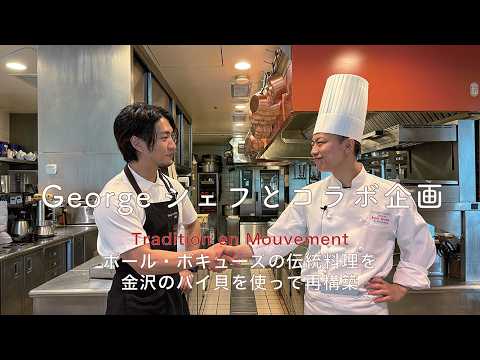
Chef Akihiko Hoshino met up with Chef George at Kanazawa's kitchen, Omicho Market. In this special collaboration, they reimagine a classic dish by the legendary Lyon master Paul Bocuse using incredible local ingredients from Kanazawa. The original French specialty features frog legs (grenouilles) and carp, but here it is reinterpreted using fresh whelk and sea bass sourced from Omicho Market. Chef Hoshino shares his enthusiasm: 'I want to use Ishikawa's peak seasonal ingredients to create a summery dish that makes you crave wine,' revealing his passion to develop this into one of his own signature dishes. Reunited for the first time since their Tokyo collaboration, the two chefs step into the world of fine gastronomy in a warm, friendly atmosphere.
The Commitment to Highly Crafted Cuisine
Entering the kitchen, they begin by prepping the sea bass. Facing a magnificent fish, Chef Hoshino asks Chef George to clean the garlic while he efficiently fillets the fish. As they work, Chef Hoshino reflects on how his culinary philosophy has evolved. 'I used to prefer a more rustic, natural plating style. But since taking charge of this restaurant in Kanazawa, I've come to believe that highly structured, meticulously crafted dishes are essential,' he confesses. In French cuisine, utilizing every scrap and trimming—which inevitably result from shaping ingredients beautifully—to create other components like a mousseline is the essence of the craft. This moment highlights his deep respect for ingredients and his professional commitment to millimeter-level precision.
Garlic Purée: The Backbone of Flavor
To give the dish a robust flavor profile, they meticulously prepare a garlic purée. Chef George quickly slices the garlic, which is then blanched (blanchir) three times starting from cold water. Chef Hoshino explains, 'This process removes any harsh bitterness and odor, leaving only the pure umami of the garlic.' Next, they simmer it in milk with a pinch of salt for about 10 minutes until it is soft enough to crush by hand. Chef George passionately explains why he frequently uses garlic in his YouTube videos: 'Since home cooks can't use stock as lavishly as professionals, establishing a flavor foundation with aromatics like garlic and onions is crucial. I use them almost like soy sauce.' Both chefs deeply agree on the vital role aromatics play in cooking.
A Muscular Effort for the Tamis Process
Next, they prepare the exquisite sea bass mousseline (flan). They blend 300g of sea bass and salt in a food processor until highly cohesive, then gradually add egg whites, heavy cream, and room-temperature butter. Although the resulting mixture is quite liquid, this precise ratio relies on the coagulating power of the eggs to yield a silky-smooth flan. To achieve this texture, they pass the mixture through a chinois (strainer), a process known as tamis (sifting/straining). When Chef George steps in to help, Chef Hoshino gets highly excited by his muscular arms. 'Those muscular arms are going to look amazing on screen!' and 'Make sure the camera gets a close-up of his arms!' he jokes, bringing high energy to the kitchen. Chef George laughs, saying, 'I've built muscle, but I have no stamina left—I'm like Vegeta, all explosive power.'
Millimeter Precision and Vapour Cooking
To the beautifully strained sea bass mousseline, they add about 50g of the garlic purée and whisk until uniform. They pour this onto a baking sheet lined with an OPP sheet and carefully smooth it out with a palette knife. Chef Hoshino insists on a thickness of exactly 7 mm. 'Not 5 mm, not 8 mm—7 mm is ideal. A difference of just a millimeter in height or a slight change in the ring mold size completely alters the style and beauty of the dish on the plate,' he says, emphasizing the importance of visual geometry in gastronomy. They cover the sheet and steam-bake it in an oven set to 90°C (vapeur) for 15 minutes, letting the eggs gently set the mixture into an exquisite flan.
Parboiling and Meticulous Whelk Prep
They move on to prepping the star ingredient: Kanazawa whelk. The live, fresh whelks are parboiled in boiling water for about 30 seconds. Chef Hoshino emphasizes the importance of this step: 'Whether it's meat or fish, parboiling removes excess fat, impurities, sand, and off-odors, while also sterilizing the ingredient.' After shocking them in ice water, they crack the shells with a tool to extract the meat. Discarding the viscera (liver), they use only the delicious muscular meat. They cut it in half, clean it thoroughly, and slice it into bite-sized pieces (about 6–7g each). Chef George notes, 'Whelk is a classic ingredient in Kanazawa's oden, isn't it?' and Chef Hoshino nods, reaffirming the local appeal of this beloved seafood.
Low-Temperature Confit Locks in Umami
The sliced whelk is prepared using the French technique of confit. They place the whelk in a vacuum bag, season lightly with salt (about 0.5% of the total weight), add aromatic thyme, and pour in enough olive oil to submerge before vacuum-sealing. This is cooked gently at a low temperature of 70°C for 1 hour. Chef Hoshino explains the science: 'Shellfish becomes tough if overcooked, but a slow confit at this low temperature relaxes the fibers, making the whelk incredibly tender.' Chef George is deeply impressed by this delicate temperature control, observing, 'It's cooked for a shorter time than a standard confit—almost like a "mi-confit" (half-confit) approach.'
Reimagined Tradition: The Ultimate Tasting
Finally, it is time for finishing and plating. They cut the steamed flan into rounds using a 5 cm ring mold, top it with a vibrant green parsley crust cut to the same size, and brown it under a salamander broiler. Instead of wheat flour, they dust the confit whelk with rice flour, gently warm it in foaming butter, and add minced garlic, shallots, and parsley to create a light, crispy meunière. They spread the warm, vibrant watercress sauce on the plate, place the flan in the center, beautifully arrange the whelk meunière on top, and garnish with micro watercress. Tasting it, Chef George is full of praise: 'This is incredibly delicious! The crispiness of the rice flour, the umami of the whelk, and the smooth richness of the sea bass flan harmonize perfectly. The dish has a clear story and is truly wonderful.' Chef Hoshino shares his passion: 'I want to use amazing regional ingredients to create memorable dishes through my recipes,' wrapping up a successful collaboration.
About 星野晃彦シェフ Teruhiko Hoshino
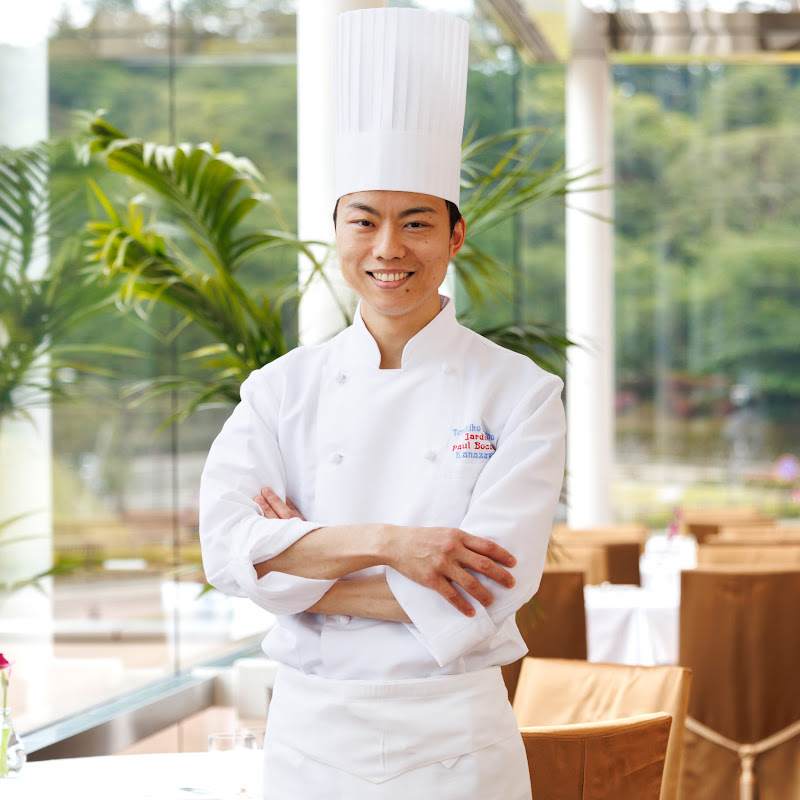
星野晃彦シェフ Teruhiko Hoshino
12.3万人 subscribers ・ フランス料理
* Opens YouTube channel
* Subscriber count is as of article creation and may differ from the current number.
