

Recipe
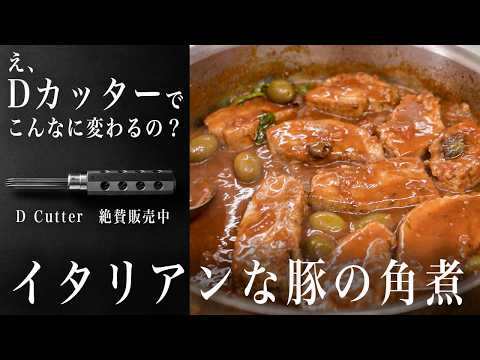
#365 [Wow, What a Difference with the D Cutter!] Italian-Style Braised Pork Belly (Kakuni) | D Cutter | Now on Sale | Ponte Vecchio | Italian
Ingredients
- Porkbelly, to taste (cut into 3 large pieces)
- Cannedwhole tomatoes (Pinocchio brand), 1 can
- Carrot,to taste
- Onion,to taste
- Celery,to taste
- Garlic,to taste (crushed with skin on)
- Taggiascaolives, to taste
- Greenolives, to taste
- Olivepaste, to taste
- Basil,to taste
- Rosemary,to taste
- Bayleaf, to taste
- Thyme,to taste
- Prosciuttoscraps, to taste
- Whitewine, to taste
- Bouillon,to taste
- Kombuwater (16–20g kombu soaked overnight in 1L water), to taste
- Oliveoil, to taste
- Saltand pepper, to taste
- Eggplant,to taste
- Anchovies,to taste
- Sherryvinegar, to taste
- Parmigiano-Reggianocheese, to taste (for garnish)
About "Italian-Style Braised Pork Belly (Kakuni)"
This Italian-style braised pork belly (kakuni) recipe uses the 'D Cutter' developed by Chef Yamane to cut through the meat's fibers, drastically reducing cooking time while achieving an incredibly tender and juicy finish. After simmering the pork in white wine, kombu water, and bouillon, it is finished with a rich Italian-style sauce made from tomato jam and olives. Served alongside an eggplant caponata-style side dish and topped with freshly grated Parmigiano-Reggiano. Chef Yamane also shares a professional tip: letting it sit overnight and reheating it the next day allows the flavors to meld beautifully.
Introduction to ポンテベッキオ山根大助の全力イタリアン →
Tips for Making "Italian-Style Braised Pork Belly (Kakuni)"
-
Prep (D Cutter)
- Visually check the direction of the pork belly's grain and pierce it repeatedly with the D Cutter perpendicular (at a right angle) to the fibers. If the meat is too thick and the cutter stops halfway, pierce it from the opposite side as well. This prevents a fibrous texture after cooking and shortens the braising time.
-
Prep (Eggplant)
- Piercing the eggplant with the D Cutter to make slits allows it to cook dramatically faster, regardless of how tough the skin is.
-
Heat & Simmering
- When braising the pork, cover and cook over very low heat, simmering slowly until the gelatin completely melts and the meat becomes tender.
-
Boosting Umami
- Using 'kombu water' (16–20g of kombu soaked overnight in 1L of water) combined with bouillon creates a powerful synergistic umami effect.
-
Sautéing Aromatics
- Crushing garlic with its skin on prevents it from burning and yields a gentler flavor. Be careful with the amount of vegetables, as too many will make the dish overly sweet; sauté until fragrant and lightly colored.
-
Seasoning
- Since salt leaches into the sauce during braising, be careful not to over-season the meat with salt and pepper. Make final seasoning adjustments at the very end.
-
Tomato Jam
- Cut the whole tomatoes perpendicular to their fibers and cook them down in a pan to evaporate the moisture, turning them into a tomato jam. Skipping this step leaves raw acidity and excess water, making this reduction key to the dish's success.
-
Finishing Tips
- Carefully skim off excess fat from the cooking liquid and reduce it slightly to concentrate the flavors before adding the tomato jam and olives. Letting the finished dish sit overnight and reheating it the next day allows the flavors to penetrate deeply.
Ingredients for "Italian-Style Braised Pork Belly (Kakuni)"
23 items* Tap ingredient names to find on Amazon
- Porkbelly, to taste (cut into 3 large pieces)
- Cannedwhole tomatoes (Pinocchio brand), 1 can
- Carrot,to taste
- Onion,to taste
- Celery,to taste
- Garlic,to taste (crushed with skin on)
- Taggiascaolives, to taste
- Greenolives, to taste
- Olivepaste, to taste
- Basil,to taste
- Rosemary,to taste
- Bayleaf, to taste
- Thyme,to taste
- Prosciuttoscraps, to taste
- Whitewine, to taste
- Bouillon,to taste
- Kombuwater (16–20g kombu soaked overnight in 1L water), to taste
- Oliveoil, to taste
- Saltand pepper, to taste
- Eggplant,to taste
- Anchovies,to taste
- Sherryvinegar, to taste
- Parmigiano-Reggianocheese, to taste (for garnish)
How to Make "Italian-Style Braised Pork Belly (Kakuni)"
- 1
Cut the pork belly into 3 large pieces and check the direction of the grain. Pierce the meat repeatedly with the D Cutter, ensuring you are cutting perpendicular (at a right angle) to the grain. If the meat is too thick and the cutter stops halfway, pierce it from the opposite side as well.
- 2
Add olive oil and the crushed garlic (with skin on) to a pan. Sauté the onion, celery, and carrot until fragrant and lightly browned, then remove them from the pan.
- 3
Lightly season the D-cut pork with salt and pepper, then sear it in the same pan until beautifully browned on all sides, rendering out excess fat as you cook.
- 4
Transfer the seared pork to a pot, add the white wine, and reduce it thoroughly.
- 5
Add the bouillon and kombu water to the pot. Once it comes to a boil, carefully skim off any foam and impurities.
- 6
Add the sautéed aromatic vegetables, herbs (bay leaf, thyme, rosemary), prosciutto scraps, and black pepper. Cover and simmer over very low heat until the gelatin melts and the meat becomes tender.
- 7
Pierce the eggplant with the D Cutter to make slits, cut it in half, sprinkle with salt, and brush with olive oil. Roast slowly in an oven preheated to 140°C (284°F).
- 8
Roughly mash the roasted eggplant with a spoon, then mix in chopped basil, anchovies, and sherry vinegar to create a caponata-style side.
- 9
Cut the whole tomatoes perpendicular to their fibers, then cook them down in a pan to evaporate the moisture and create a thick tomato jam.
- 10
Once the pork is completely tender, remove it from the pot and cut it into bite-sized pieces.
- 11
Carefully skim off any excess fat from the remaining cooking liquid in the pot, then simmer it slightly to concentrate the flavors.
- 12
Add the tomato jam, green olives, Taggiasca olives, basil, and olive paste to the cooking liquid. Return the cut pork to the pot and simmer briefly to let the meat absorb the sauce.
- 13
Season with salt and pepper to taste. Plate the pork, serve with the caponata-style eggplant on the side, and finish with a generous grating of Parmigiano-Reggiano. (If possible, let it sit overnight and reheat the next day for even better flavor integration.)
Detailed Commentary on "Italian-Style Braised Pork Belly (Kakuni)"
* Content organized by topics from the video.
40th Anniversary Party & Special Chef's Coat
Chef Yamane appeared wearing a special chef's coat embroidered with 'Contemporary Master Craftsman,' the Italian flag, and his name on the back. At the recent 40th-anniversary party for Ponte Vecchio, around 500 guests gathered, and about 60 former staff members returned to handle the kitchen. This wonderful chef's coat was a gift from everyone at the event, and Chef Yamane shared this story with great joy. Reflecting on the success of the party, he introduces a special dish using the 'D Cutter,' a new kitchen tool unveiled at the celebration.
Introducing the D Cutter & Ingredients
The 'D Cutter' used today is a tool Chef Yamane spent five years developing to make meat incredibly tender. Equipped with four sharp blades, it finely cuts through meat fibers. This tool works wonders not only for grilled dishes like steak but also for stews and braises. Today's menu features 'Italian-Style Braised Pork Belly' using this D Cutter. While traditional Japanese kakuni is delicious, this version is tailored for an Italian restaurant. Along with the main pork belly, the ingredients include whole tomatoes, carrots, onions, celery, garlic, and Italian accents like Taggiasca olives, green olives, olive paste, and fresh herbs like basil and rosemary.
Prep & D Cutter Technique for Pork Belly
We begin by prepping the main ingredient, the pork belly. Cut the pork belly into three large pieces and check the direction of the grain. Pierce the meat repeatedly with the D Cutter, ensuring the blades enter perpendicular (at a right angle) to the fibers. If the meat is too thick and the cutter stops halfway, the trick is to pierce it from the opposite side as well. Cutting the fibers short with the D Cutter prevents the meat from falling apart during braising and minimizes moisture loss. It completely eliminates the unpleasant sensation of fibers getting stuck in your teeth, resulting in a melt-in-your-mouth texture. Since the grain in pork belly can be irregular, work carefully, visually checking to ensure you always cut perpendicular to the fibers.
Sautéing Aromatics & Searing the Pork
Next, we prepare the aromatic vegetables (mirepoix) that form the base of the braise. In a pan, heat olive oil and add garlic crushed with its skin on—this prevents it from burning and yields a gentler flavor. Sauté the onion, celery, and carrot. Be careful with the quantity, as too many vegetables will make the dish overly sweet; sauté until fragrant and lightly colored, then remove them. Next, season the D-cut pork with salt and pepper. Since salt leaches into the sauce during braising, be careful not to over-season. Sear the pork in the pan to get a beautiful color and trigger the Maillard reaction, drawing out savory aromas while rendering excess fat.
Simmering for Umami Synergy
Transfer the seared pork to a pot, add white wine, and reduce it thoroughly. Then, add bouillon and 'kombu water' (made by soaking 16–20g of kombu in 1L of water overnight). Combining kombu water with meat bouillon creates a powerful umami synergy. Once it boils, carefully skim off any foam, then add the sautéed aromatics and herbs like bay leaf, thyme, and rosemary. To boost the umami even further, add prosciutto scraps and black pepper, cover, and simmer over very low heat. Chef Yamane emphasizes that 'it is crucial to simmer until the gelatin completely melts and the meat becomes tender,' and also mentions professional techniques like vacuum-packing and slow-cooking at low temperatures.
Eggplant Caponata & Tomato Jam
While the meat is simmering, prepare the eggplant garnish and the tomato sauce. Pierce the eggplant with the D Cutter as well. Eggplant skin is tough, so you might feel some resistance, but making these slits dramatically speeds up the cooking process. Cut the eggplant in half, sprinkle with salt, brush with olive oil, and roast slowly in a 140°C (284°F) oven. Once roasted, roughly mash it with a spoon and mix in chopped basil, anchovies, and sherry vinegar to create a caponata-style side. For the sauce, use Pinocchio brand canned whole tomatoes. Cut the tomatoes perpendicular to their fibers and cook them down in a pan to evaporate the moisture, creating a 'tomato jam.' If used without reducing, the tomato's raw acidity and excess water will remain, making this reduction step the key to rich flavor.
Finishing the Sauce & Overnight Pro Tip
Once the pork is completely tender, remove it from the pot and cut it into bite-sized pieces. Carefully skim off any excess fat from the remaining cooking liquid, reduce it slightly to concentrate the flavors, and then add the tomato jam. Stir in the green olives, Taggiasca olives, basil, and olive paste, then return the cut pork to the pot and simmer briefly to let the flavors meld. Chef Yamane reveals a professional secret: 'Honestly, letting it sit overnight to let the flavors penetrate to the core, then reheating it the next day, makes it taste the absolute best.' Finally, adjust the seasoning with salt and pepper, plate the dish with the eggplant on the side, and finish with a generous grating of Parmigiano-Reggiano.
Tasting: Incredible Tenderness & Juiciness
Now, it's time to taste the finished dish. The tenderness is apparent the moment the knife glides through, and the texture in the mouth is astonishing. Although the braising process—which normally takes over three hours—was cut nearly in half using the D Cutter, the meat is not dry at all and retains its juicy, savory flavor. There is absolutely no fibrous texture left behind, leaving only a pleasant, tender bite. Chef Yamane praises his own creation, saying, 'It's so good I have to praise myself. It's such a wonderful result that you're missing out if you don't buy a D Cutter.' Finally, he shares information on the D Cutter's restocking and invites viewers to visit his restaurant, Ponte Vecchio, wrapping up the video in a warm, friendly atmosphere.
About ポンテベッキオ山根大助の全力イタリアン
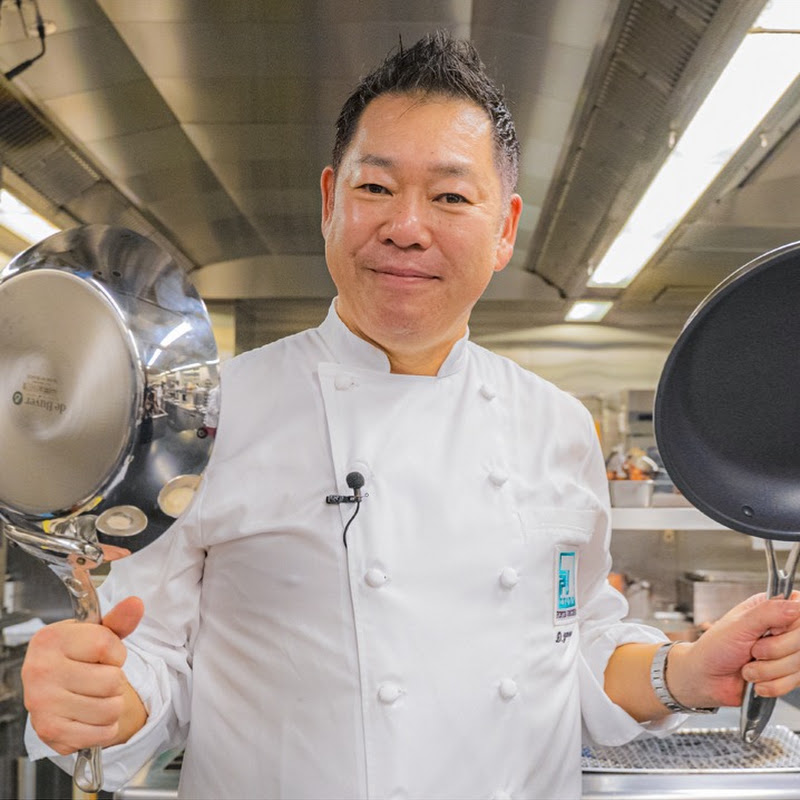
ポンテベッキオ山根大助の全力イタリアン
3.6万人 subscribers ・ イタリアン
* Opens YouTube channel
* Subscriber count is as of article creation and may differ from the current number.
