

Recipe
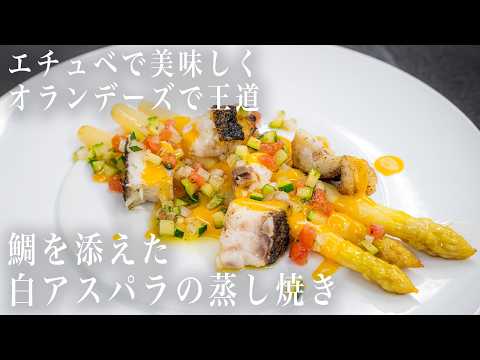
#360 Steamed White Asparagus (Étuve) with Sea Bream & Hollandaise | Italian
Ingredients
- 6white asparagus spears
- 100gred sea bream
- 100greduction
- 4egg yolks
- 65gcultured butter
- 12gonion
- 30gfruit tomato
- 45gzucchini
- 12gcelery
- 5gtarragon
- 5gbasil
- 5gbud onions (menegi)
- Vinaigretteto taste
- Sudachicitrus to taste
- Extravirgin olive oil to taste
- [Reduction]60g shallots
- [Reduction]150g white wine
- [Reduction]150g Noilly Prat
- [Reduction]30g clam broth
- [Reduction]10g anchovies
About "Red Sea Bream and White Asparagus Étuve with Hollandaise Sauce"
Chef Daisuke Yamane of Ponte Vecchio presents a dish of seasonal white asparagus cooked using the étuvé (steaming) technique, served with charcoal-grilled red sea bream. The sauce is a rich hollandaise made by combining egg yolks and cultured butter with a reduction of shallots, white wine, Noilly Prat, and clam broth. A key tip is salting the sea bream in advance to gel the proteins, keeping it incredibly juicy when grilled. The dish is finished with a vibrant vinaigrette salad of tomatoes, celery, and zucchini, along with the refreshing aroma of sudachi citrus to create a beautiful contrast of flavors.
Introduction to ポンテベッキオ山根大助の全力イタリアン →
Tips for Making "Red Sea Bream and White Asparagus Étuve with Hollandaise Sauce"
-
Prep
- Peel and trim the white asparagus, then use the peels and ends to make an asparagus broth.
-
Prep
- Lightly salt the sea bream to draw out moisture and gel the proteins, keeping it juicy when grilled.
-
Heat control
- For the étuvé, add a small amount of broth, olive oil, and salt so the asparagus is not fully submerged, then cover and steam over low heat. Submerging it completely boils the asparagus and dilutes the flavor.
-
Sauce
- Make the reduction by boiling shallots, Noilly Prat, and white wine until reduced to 1/5 or 1/6, then add kombu water to extract maximum flavor before straining.
-
Sauce
- Thicken the egg yolks for the hollandaise over an 80°C (176°F) water bath, whisking continuously and scraping the sides to prevent overheating.
-
Sauce
- Use whole cultured butter instead of clarified butter to preserve the milk solids, which provide sweetness and umami.
-
Seasoning
- Season each ingredient in the vinaigrette salad individually, making sure to salt the tomatoes generously.
-
Plating
- Coat the asparagus with the small amount of liquid remaining in the pan after steaming to give it a glossy finish before plating.
-
Plating
- Cut the grilled sea bream into bite-sized pieces, then finish with fresh sudachi juice and grated zest for a bright aroma.
-
Substitution
- If shallots are unavailable, substitute with scallions or scallion bulbs (rakkyo) rather than regular onions.
Ingredients for "Red Sea Bream and White Asparagus Étuve with Hollandaise Sauce"
20 items* Tap ingredient names to find on Amazon
- 6white asparagus spears
- 100gred sea bream
- 100greduction
- 4egg yolks
- 65gcultured butter
- 12gonion
- 30gfruit tomato
- 45gzucchini
- 12gcelery
- 5gtarragon
- 5gbasil
- 5gbud onions (menegi)
- Vinaigretteto taste
- Sudachicitrus to taste
- Extravirgin olive oil to taste
- [Reduction]60g shallots
- [Reduction]150g white wine
- [Reduction]150g Noilly Prat
- [Reduction]30g clam broth
- [Reduction]10g anchovies
How to Make "Red Sea Bream and White Asparagus Étuve with Hollandaise Sauce"
- 1
[Asparagus Prep] Peel the white asparagus and trim the woody ends. Use the peels and ends to make an asparagus broth.
- 2
[Fish Prep] Lightly salt the sea bream and let it sit to draw out moisture and gel the proteins.
- 3
[Making the Reduction] Finely chop the shallots (60g) and place them in a pot. Add Noilly Prat (150g) and white wine (150g), bring to a boil, and reduce until the liquid is concentrated to 1/5 or 1/6 of its original volume.
- 4
Add a small amount of kombu dashi water to the reduced shallots to extract maximum umami, then strain carefully.
- 5
Add clam broth (30g) to the strained liquid, let it cool slightly, then whisk in the egg yolks (4).
- 6
[Finishing the Hollandaise] Place over a water bath at about 80°C (176°F). Whisk continuously, scraping the sides of the pot to prevent overheating, until the mixture thickens.
- 7
Once thickened, add extra virgin olive oil and cultured butter (65g, whole/unclarified) and whisk to emulsify, completing the sauce.
- 8
[Vinaigrette Salad] Lightly sauté the celery and zucchini beforehand. Finely dice the fruit tomato, celery, onion, and zucchini.
- 9
Season each ingredient with an appropriate amount of salt (salt the tomatoes generously). Toss with bud onions, tarragon, basil, wine vinegar, olive oil, and black pepper to make the vinaigrette salad.
- 10
[Étuve] Arrange the asparagus in a pan. Add a small amount of asparagus broth, olive oil, and salt, ensuring the asparagus is not completely submerged.
- 11
Cover with a lid and cook over low heat, steaming the asparagus from the inside out using its own moisture.
- 12
[Grilling the Fish] Grill the prepared sea bream over charcoal until fragrant, then cut into bite-sized pieces.
- 13
[Plating] Coat the asparagus with the small amount of liquid remaining in the pan after steaming to give it a nice glaze, then arrange on a plate.
- 14
Place the grilled sea bream on top of the asparagus, then squeeze sudachi juice and grate some sudachi zest over it.
- 15
Spoon a generous amount of hollandaise sauce over the dish, garnish beautifully with the vinaigrette salad, and serve.
Detailed Commentary on "Red Sea Bream and White Asparagus Étuve with Hollandaise Sauce"
* Content organized by topics from the video.
Spring Flavors: White Asparagus & Sea Bream
Chef Daisuke Yamane of Ponte Vecchio introduces a classic Italian dish featuring seasonal white asparagus, which is nearing the end of its peak. The accompanying sauce is a classic French-style hollandaise (sabayon sauce) made with shallots, white wine, vermouth (Noilly Prat), butter, and concentrated clam broth for added depth. He pairs this with red sea bream, known as 'Sakura-dai' (cherry blossom sea bream) during this pre-spawning season when it is at its absolute best. Chef Yamane notes that by summer, the fish is called 'Straw-hat sea bream' and its flavor declines, making now the perfect time to enjoy it. The cooking begins with preparing the white asparagus for slow cooking.
The Art of Étuvé: Locking in Pure Flavor
To cook the white asparagus, the chef uses his signature 'étuvé' (steaming) technique. First, the woody ends of the asparagus are trimmed so they fit neatly in the pan. The spears are arranged in the pan along with 'asparagus broth' made from the peeled skins and trimmed ends. The crucial point here is to ensure the asparagus is not completely submerged. If it is, the process becomes boiling, which washes away the flavor. By adding just a small amount of broth, olive oil, and salt, covering the pan, and cooking over low heat, the moisture inside the asparagus reaches 100°C, steaming it from the inside out. This professional technique locks the natural flavors inside rather than letting them escape.
Protein Gelling & Building the Reduction
Next, the chef prepares the 'reduction' that forms the base of the sauce. A generous amount of chopped shallots, Noilly Prat, and white wine are brought to a boil in a pot and reduced. If shallots are unavailable, the chef recommends substituting scallions or scallion bulbs (rakkyo) rather than regular onions. The mixture is reduced until only 1/5 to 1/6 of the liquid remains. Meanwhile, the sea bream is lightly salted in advance to draw out moisture. Salting causes the fish proteins to 'gel,' which helps lock in moisture during cooking, resulting in an incredibly juicy texture. While drawing out moisture might seem like it would dry the fish out, the chef explains that this gelling process actually increases water retention—a scientific approach he confirmed through his own kitchen experiments.
Emulsification: Rich Hollandaise Sauce
A small amount of kombu water is added to the reduced shallots to extract the maximum amount of umami before straining the mixture thoroughly. Clam broth is added to the strained liquid, and once it cools slightly, egg yolks are whisked in. In this demonstration, the chef added an extra egg yolk (making 4 in total) to help the sauce thicken properly. The mixture is placed over a water bath at around 80°C and whisked continuously, scraping the bottom and sides of the pot to prevent overheating. To finish, olive oil and butter are added. Instead of clarified butter, Chef Yamane deliberately uses whole cultured butter. Clarifying butter removes the milk solids, which carry sweetness and umami; keeping them whole preserves a rich, deep flavor in the sauce.
Vibrant Salad for a Contrast of Flavors
To add a dramatic accent to the dish, a colorful salad of finely diced tomatoes, celery, onions, and zucchini is prepared. The celery and zucchini are lightly sautéed beforehand. When seasoning, the chef emphasizes salting each ingredient individually according to its needs—for instance, salting the tomatoes generously. The vegetables are then tossed with bud onions, tarragon, wine vinegar, olive oil, and pepper to create a vinaigrette. Chef Yamane explains that contrast is vital in cooking. Since the hollandaise sauce only has acidity derived from wine, scattering this salad provides a sharp, bright acidity that makes the flavors pop in your mouth.
Perfect Harmony & the Joy of Western Cuisine
To plate, the steamed white asparagus is arranged on a dish. The chef coats the spears with the tiny amount of liquid left in the pan to give them a beautiful glaze. The charcoal-grilled sea bream, cut into bite-sized pieces, is placed on top, followed by a squeeze of fresh sudachi juice and a grating of its zest for a refreshing aroma. Finally, the rich hollandaise sauce is spooned over, and the colorful salad is scattered beautifully around. Tasting the dish, both the director and the chef praise the perfect crunch of the asparagus, the rich sweetness of the sauce, the tender fish, and the bright contrast of the salad. Chef Yamane concludes by sharing his deep love for Western cuisine, noting that its true joy lies in the process of building complex sauces from scratch as you cook.
About ポンテベッキオ山根大助の全力イタリアン
ポンテベッキオ山根大助の全力イタリアン
3.6万人 subscribers ・ イタリアン
* Opens YouTube channel
* Subscriber count is as of article creation and may differ from the current number.
