

Recipe
[Pectin Lock] Vinegar-Boiled & Frozen! The Ultimate French Fries
Ingredients
- Danshakupotatoes (or other starchy potatoes), as desired
- Water,1 liter
- Vinegar(grain, rice, or white wine vinegar), 15–30g (approx. 20g)
- Fryingoil, to taste
- Salt,to taste
About "Vinegar-Boiled & Frozen French Fries (Frites Pont-Neuf)"
This scientific cooking method involves boiling Danshaku (fluffy) potatoes in vinegar water to lock the cell wall pectin under acidic conditions, preventing them from breaking apart while fully gelatinizing the starch at the core. Freezing them after boiling adds three benefits: starch recrystallization, surface drying, and micro-blister formation, resulting in an ultra-crispy exterior and fluffy interior when fried. Since they can be fried directly from frozen in 180°C (350°F) oil with just a single fry, this method is also perfect for meal prep.
Introduction to フレンチシェフ高御仁のガチレシピ →
Video Timestamps
Tips for Making "Vinegar-Boiled & Frozen French Fries (Frites Pont-Neuf)"
-
Prep
- Cut Danshaku potatoes into 1cm thick sticks (batonnet) or skin-on wedges.
-
Boiling
- Add 15–30g of vinegar (about 20g) to 1L of water, add the potatoes, and simmer over low heat for 10 minutes. This creates a slightly acidic pH of 4.0–4.5, locking the pectin to prevent crumbling.
-
Boiling
- Any vinegar (grain, rice, white wine, etc.) can be used. The acidity evaporates during frying, so it barely affects the final flavor.
-
Boiling
- Boiling with vinegar keeps the water clear. This proves starch isn't leaking out, which prevents excess starch from burning and causing bitterness, resulting in a beautiful, even golden color.
-
Freezing
- Let the boiled potatoes cool, arrange them on a tray, and freeze completely. This triggers starch recrystallization, surface drying, and micro-blister formation.
-
Frying
- Do not thaw before frying. Fry them straight from frozen in 180°C (350°F) oil in a single fry. Fry in small batches to keep the oil temperature from dropping.
-
Finishing
- Toss with salt immediately after frying. Since the potatoes are already fully cooked through the boiling and freezing steps, double-frying is unnecessary.
Ingredients for "Vinegar-Boiled & Frozen French Fries (Frites Pont-Neuf)"
5 items* Tap ingredient names to find on Amazon
How to Make "Vinegar-Boiled & Frozen French Fries (Frites Pont-Neuf)"
- 1
Cut the potatoes into 1cm thick sticks (batonnet) or wedges with the skin on.
- 2
Add 1L of water and 15–30g of vinegar to a pot and bring to a boil.
- 3
Add the cut potatoes to the boiling vinegar water and simmer over low heat for 10 minutes.
- 4
Transfer the boiled potatoes to a tray and let them cool to room temperature.
- 5
Once cooled, arrange the potatoes in a single layer on the tray and freeze completely (can be stored for meal prep).
- 6
Without thawing, fry the frozen potatoes in small batches in oil heated to 180°C (350°F) until golden brown (single fry).
- 7
Toss with salt immediately after frying and serve.
Detailed Commentary on "Vinegar-Boiled & Frozen French Fries (Frites Pont-Neuf)"
* Content organized by topics from the video.
The Ultimate Fries: Vinegar and Freezing
In this video, French chef and VTuber Takami Jin brings you everyone's favorite: French fries. Have you ever tried making fries at home only to have them fall apart or turn out soggy and heavy? This is actually due to a dilemma unique to potatoes. Fluffy Danshaku potatoes break apart and burn easily, while waxy May Queen potatoes hold their shape but lack that fluffy texture. While professional chefs struggle with this daily, we will show you how to make the ultimate French fries—crispy on the outside and fluffy on the inside—using standard supermarket potatoes and household vinegar, backed by molecular gastronomy.
Experiment: How Vinegar Prevents Breaking
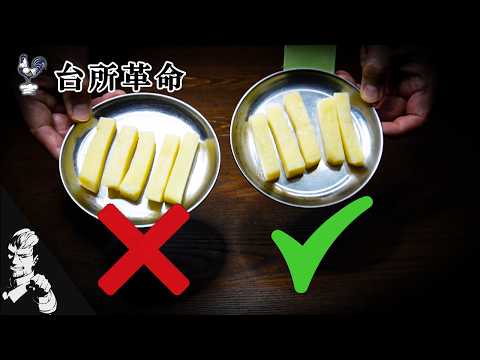
Let's start with an experiment to see the effects of vinegar. We cut Danshaku potatoes into 1cm sticks and simmer them in 1L of boiling water over low heat for 10 minutes. The potatoes boiled in plain water visibly crumble at the edges and break apart on the surface as soon as they are lifted out. Next, we boil another batch under the same conditions but with 20–30g of vinegar added to the water. This time, the boiled potatoes retain perfectly sharp, clean edges, looking almost as intact as when they were raw. This technique of thoroughly cooking the inside while keeping the shape perfectly intact is the amazing effect of "pectin thermal decomposition locking."
Beautiful Potato Wedges with a Single Fry
This technique works wonders for skin-on potato wedges as well. Even after boiling the sharp-edged wedges in vinegar water for 10 minutes, they cook through beautifully without losing their shape. We then fry them in 180°C (350°F) oil. Normally, making delicious French fries requires double-frying at low and high temperatures, but with this method, that extra step is completely unnecessary. Because the boiling process has already perfectly cooked the potatoes to the core, the frying step is a simple "single fry" just to crisp up the exterior. This drastically reduces effort while delivering professional-quality results.
The Science of the Pectin Thermal Lock
Why does adding vinegar to the boiling water prevent the potatoes from breaking apart? The secret lies in pectin, a polysaccharide that glues the potato cells together. In neutral or alkaline boiling water, pectin easily breaks down and softens when heated, causing the potatoes to crumble. However, by adding vinegar to lower the pH to a slightly acidic 4.0–4.5, the pectin bonds are locked tight, strongly resisting thermal breakdown. This scientific approach allows even easily crumbled Danshaku potatoes to be boiled thoroughly to their limit without losing their shape.
Gelatinizing Starch for Ultimate Fluffiness
The biggest benefit of locking pectin with vinegar is that you can boil the potatoes for a long time without fear of them breaking apart. This allows heat to penetrate completely to the core, achieving 100% starch gelatinization (alpha-starch conversion). With normal boiling, the surface crumbles before the core is cooked, often resulting in undercooked centers. With this method, however, you can fully gelatinize the starch to the very center while keeping the surface pristine. This creates an incredibly fluffy, creamy texture that melts in your mouth with absolutely no dryness.
Preventing Burns for a Perfect Golden Color
Boiling with vinegar also has a positive effect on the color of the fries. Because the pectin is locked and the cell walls remain intact, starch inside the cells does not leak into the water. This is proven by the fact that the boiling water remains clear, unlike the cloudy water of regular boiling. Preventing starch from leaking to the surface means there is no excess starch to burn during frying. This prevents the bitter taste caused by burnt sugars, resulting in beautifully uniform, golden-brown French fries.
The Science of Freezing for Extra Crispiness
We highly recommend freezing the boiled potatoes on a tray before frying. Freezing actually offers three scientific benefits. First is starch recrystallization (retrogradation). Cooling and freezing tighten the starch structure, creating a strong outer crust that won't go soggy when fried. Second is the extreme dry-out effect. The dry environment of the freezer removes excess surface moisture, preventing oil splattering and allowing heat to transfer instantly. Third is the formation of micro-blisters. The rapid vaporization of internal ice crystals in 180°C (350°F) oil creates countless microscopic cavities on the surface, yielding an incredibly light, crispy texture.
Efficient Prep and a Teaser for Next Time
This "boil-in-vinegar then freeze" method is also highly efficient for restaurant operations. By cutting, boiling, and freezing the potatoes individually, you can serve the ultimate fries anytime simply by tossing them straight from the freezer into 180°C (350°F) oil. The amount of vinegar needed is just 15–30g per liter of water (about 20g is plenty), and any type like white wine vinegar or grain vinegar works. The acidity evaporates during frying, so it won't affect the final taste. Finally, a teaser for our sharp-eyed viewers: if acid locks pectin, then alkali should release it to make things ultra-soft. Next time, we'll introduce an amazing trick using alkaline water, so stay tuned!
About フレンチシェフ高御仁のガチレシピ

フレンチシェフ高御仁のガチレシピ
6,310人 subscribers ・ フランス料理
* Opens YouTube channel
* Subscriber count is as of article creation and may differ from the current number.
