

Recipe
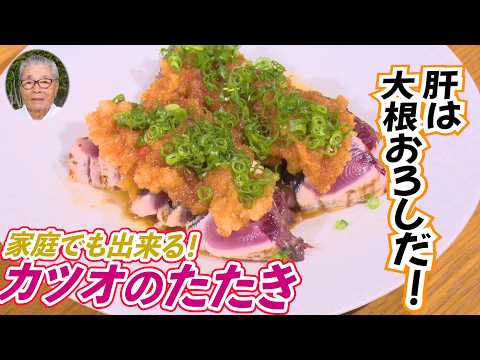
【The Secret is Grated Daikon】Homemade Katsuo no Tataki (Seared Bonito) | Rokusaburo Michiba's Home Cooking Recipe #155
Ingredients
- Bonitoloin (saku), to taste
- Salt,to taste
- Grateddaikon radish, generous amount
- Momijioroshi paste (spicy grated daikon), to taste
- Ponzusauce, to taste
- Asatsuki(or scallions), to taste
About "Katsuo no Tataki (Seared Bonito) with Grated Daikon Ponzu"
Iron Chef Rokusaburo Michiba introduces a homemade version of Katsuo no Tataki (seared bonito). Avoid using a fish grill as it cooks the inside too much; instead, sear it directly over a gas stovetop flame using a wire rack. Do not plunge the seared fish into ice water—slicing it while still warm locks in the umami. The key to this recipe is the special grated daikon ponzu sauce, made by mixing grated daikon with spicy momiji oroshi (red chili daikon paste) and letting it absorb the ponzu. The spicy daikon cuts through the rich fish, creating a refreshing dish you won't be able to stop eating.
Tips for Making "Katsuo no Tataki (Seared Bonito) with Grated Daikon Ponzu"
-
Heat control
- Do not use a fish grill as it cooks the inside. Place a wire rack over a gas stovetop flame to sear the bonito.
-
Searing technique
- Sear the skin side thoroughly as it becomes tough when cooled. Lightly sear the flesh sides just until the surface turns white.
-
Prep
- Do not plunge the seared bonito into ice water; slice it while warm. An ice bath washes away umami and prevents it from blending with the daikon.
-
Seasoning
- Mix grated daikon with store-bought momiji oroshi paste, then pour in ponzu and let it absorb completely before using.
-
Plating
- Generously spoon the special grated daikon ponzu over the warm bonito and garnish with plenty of chopped scallions.
-
Prep
- Sprinkle salt over the surface of the bonito before searing.
Ingredients for "Katsuo no Tataki (Seared Bonito) with Grated Daikon Ponzu"
6 items* Tap ingredient names to find on Amazon
How to Make "Katsuo no Tataki (Seared Bonito) with Grated Daikon Ponzu"
- 1
Sprinkle salt over the surface of the bonito.
- 2
Place a wire grill rack over a gas stovetop and sear the bonito over the open flame. Start by thoroughly searing the skin side.
- 3
Lightly sear the flesh sides just until the surface turns white.
- 4
Do not plunge the seared bonito into ice water; slice it into bite-sized pieces while still warm.
- 5
Prepare a generous amount of grated daikon in a bowl, add the momiji oroshi paste, and mix well.
- 6
Pour in the ponzu sauce and let the grated daikon absorb it completely to make the special grated daikon ponzu.
- 7
Arrange the sliced bonito on a plate and generously spoon a large amount of the special grated daikon ponzu on top.
- 8
Garnish with a generous sprinkle of chopped scallions to finish.
Detailed Commentary on "Katsuo no Tataki (Seared Bonito) with Grated Daikon Ponzu"
* Content organized by topics from the video.
Behind-the-Scenes of 'Iron Chef' & Curiosity
At 95 years old, Japanese cuisine Iron Chef Rokusaburo Michiba shares a story from when he accepted the offer to appear on the legendary show 'Iron Chef' at age 63. While most would decline such a grueling challenge at that age, Michiba reveals, 'I heard it would only run for six months, so I thought I'd give it a try.' Driven by an extraordinary curiosity for new things, he made a quick decision. Although the show ended up running much longer than six months, this insatiable curiosity remains the driving force behind his active culinary career today.
The Iron Chef's Philosophy: 'Honest Cooking'
Michiba takes up a brush to share a handwritten message for everyone who cooks. In powerful calligraphy, he writes 'Honest Cooking' (Sunao na Ryori). This phrase embodies his signature approach—a simple, straightforward attitude that highlights the natural quality of ingredients. The staff admires the piece, noting how perfectly it reflects his character. It is a warm message from the Iron Chef, reminding us of the importance of facing ingredients honestly without unnecessary gimmicks. As a fundamental mindset for cooking, we should always remain honest with our ingredients.
Today's Featured Ingredient: Katsuo
Today's featured ingredient is bonito (katsuo), showcasing a beautiful, vibrant red flesh. On the menu, Michiba boldly writes 'Katsuo Tataki' in calligraphy. While seared bonito is famous as a cornerstone of Kochi Prefecture's traditional 'Sawachi' cuisine, Michiba introduces a recipe that makes it easy to enjoy professional-grade flavor at home. Although katsuo no tataki is often perceived as difficult to prepare, Michiba's clever techniques elevate it into an exquisite, foolproof recipe for any home kitchen.
No Fish Grill! The Secret of Open-Flame Searing
To start, Michiba carefully sprinkles salt over the bonito. When the staff asks if a standard home fish grill can be used, Michiba immediately replies, 'No, a fish grill will cook the inside too much.' The golden rule of katsuo no tataki is to rapidly sear only the surface with an open flame. This is where a wire grill rack comes in. Using the direct flame of a gas stovetop, he sears the bonito on the rack. He starts by thoroughly searing the skin side. Since the skin becomes tough and hard to eat once cooled, searing it well is crucial for a delicious finish. For the flesh sides, a light sear until the surface turns white is more than enough.
Skip the Ice Bath! The Appeal of Warm Tataki
Michiba shares his unique philosophy on handling the bonito after searing. While it is common practice to plunge the seared fish into ice water to cool it down, Michiba's method is to 'serve it warm without putting it in water.' Cooling it in water not only washes away the precious umami but also prevents the fish from blending well with the grated daikon. Slicing it while still warm allows the smoky aroma of the bonito and the moisture of the grated daikon to meld beautifully, dramatically improving the harmony of flavors in your mouth. The cross-section of the sliced bonito reveals a beautifully seared white edge with a perfectly rare center.
Spiciness is Key: Special Grated Daikon Ponzu
The absolute key to this dish is Michiba's signature condiment. He takes a generous bowl of grated daikon, adds store-bought momiji oroshi paste (red chili daikon), and mixes them thoroughly. He then pours ponzu sauce directly into the bowl, letting the grated daikon absorb it completely to create his 'special grated daikon ponzu.' This condiment is then spooned dramatically and generously over the warm, plated bonito. To finish, he scatters a handful of chopped scallions over the top, completing Michiba's visually stunning and mouthwatering katsuo no tataki.
Highly Praised: Endless Eating with Daikon Ponzu
Michiba's granddaughter, Natsuki Samejima, joins for the tasting. Taking a bite loaded with the grated daikon ponzu, she smiles and says, 'It's actually quite spicy!' but immediately beams at the delicious flavor. Michiba explains his preference: 'It's not exciting unless it has this level of kick.' Natsuki praises it highly, saying, 'Usually, people serve this with sliced onions or daikon sprouts, but this grated daikon is so much better! You can eat so much of it.' While raw sashimi can feel heavy after a few slices, this special grated daikon ponzu keeps it incredibly refreshing, making it an exquisite dish you can eat endlessly and easily recreate at home.
About 鉄人の台所

鉄人の台所
21.2万人 subscribers ・ 和食・家庭料理
* Opens YouTube channel
* Subscriber count is as of article creation and may differ from the current number.
