

Recipe
7,000 Yen for a Ramen Course?! Michelin-Starred Vegan Ramen | Vegan Ramen UZU Kyoto [Gangan's Cooking School]
Ingredients
- Rausukelp (for broth)
- Domesticshiitake mushrooms (for broth)
- Assortedvegetables (for broth)
- Hokkaidowheat flour (for noodles)
- Organicwhole wheat flour from Miyazaki (for noodles)
- Soysauce and fermented mugwort liquid (for tare sauce)
- Maitakemushrooms (roasted for topping)
- Onion(minced for topping)
- Cashewnuts (for vegan cheese)
- Miso(for vegan cheese)
- Kinome/ young sansho leaves (for appetizer topping)
- Coconut(for appetizer and dessert)
- Yatsuhashi(cinnamon cookie, used as base/ingredient for appetizer)
- Shiitaketsukudani / simmered shiitake (for seaweed rolls)
- Edamame(for seaweed rolls)
- Sanshopepper (for seaweed rolls)
- Oba/ shiso leaves (for seaweed rolls)
- Toastednori seaweed (for seaweed rolls)
- Kinako/ roasted soybean flour (for dessert)
- Kuromitsu/ brown sugar syrup (for dessert sauce)
- Coconutmilk (for dessert sauce)
- Cold-brewedhojicha (welcome drink)
About "Vegan Ramen Course (Vegan Ramen UZU Kyoto)"
Located in Higashiyama, Kyoto, "Vegan Ramen UZU Kyoto" is a vegan ramen specialty restaurant that has earned a Michelin Green Star for two consecutive years and a Bib Gourmand for five consecutive years. The interior is an immersive space enveloped in a teamLab art installation, offering a welcome experience where guests align their senses with aroma oils before dining. The course consists of cold-brewed hojicha, vegan cheese with yatsuhashi, seaweed rolls, the main ramen, and kinako (roasted soybean flour) ice cream, achieving deep richness and umami without any animal products. The main Shoyu and Fermented Mugwort Liquid Ramen features a broth cold-brewed for 12 hours with Rausu kelp, domestic shiitake mushrooms, and vegetables, accented by roasted maitake mushrooms and minced onion toppings.
Video Timestamps
Tips for Making "Vegan Ramen Course (Vegan Ramen UZU Kyoto)"
-
Broth
- By cold-brewing Rausu kelp, domestic shiitake, and vegetables for 12 hours, they extract a deep richness and umami without using any animal products.
-
Noodles
- The noodles are made with a carefully selected blend of Hokkaido wheat flour and organic whole wheat flour from Miyazaki for optimal flavor and nutrition.
-
Toppings
- The charred aroma of roasted maitake adds an edge to the broth, while the sharpness of minced onions helps cleanse the palate.
-
Appetizer (Cheese)
- A complex flavor is achieved by making a vegan cheese from a cashew and miso base, then layering it with kinome and coconut flavors.
-
Appetizer (Roll)
- Eaten by wrapping rice mixed with shiitake, edamame, and sansho in toasted nori with shiso; the simmered shiitake is the key to its nostalgic flavor.
-
Dessert
- The dairy-free, egg-free kinako ice cream is incredibly smooth with no ice crystals, tasting like warabi mochi when paired with kuromitsu and coconut milk.
-
Welcome Experience
- Before being seated, guests rub aroma oil on their hands and take a deep breath, a ritual designed to align the senses before the course begins.
-
Concept
- Practicing sustainable gastronomy, it is one of the few restaurants in Japan to be awarded a Michelin Green Star.
Ingredients for "Vegan Ramen Course (Vegan Ramen UZU Kyoto)"
22 items* Tap ingredient names to find on Amazon
- Rausukelp (for broth)
- Domesticshiitake mushrooms (for broth)
- Assortedvegetables (for broth)
- Hokkaidowheat flour (for noodles)
- Organicwhole wheat flour from Miyazaki (for noodles)
- Soysauce and fermented mugwort liquid (for tare sauce)
- Maitakemushrooms (roasted for topping)
- Onion(minced for topping)
- Cashewnuts (for vegan cheese)
- Miso(for vegan cheese)
- Kinome/ young sansho leaves (for appetizer topping)
- Coconut(for appetizer and dessert)
- Yatsuhashi(cinnamon cookie, used as base/ingredient for appetizer)
- Shiitaketsukudani / simmered shiitake (for seaweed rolls)
- Edamame(for seaweed rolls)
- Sanshopepper (for seaweed rolls)
- Oba/ shiso leaves (for seaweed rolls)
- Toastednori seaweed (for seaweed rolls)
- Kinako/ roasted soybean flour (for dessert)
- Kuromitsu/ brown sugar syrup (for dessert sauce)
- Coconutmilk (for dessert sauce)
- Cold-brewedhojicha (welcome drink)
How to Make "Vegan Ramen Course (Vegan Ramen UZU Kyoto)"
- 1
[Welcome Experience] Before being seated, staff guide you to rub aroma oil on your hands and take a deep breath.
- 2
[Welcome Drink] Cold-brewed hojicha is served in a wine glass. Enjoy the aroma and the shift in flavor profile once tasted.
- 3
[Appetizer 1: Vegan Cheese & Yatsuhashi] A bite-sized dish eaten by hand, featuring a cashew and miso-based vegan cheese on top of yatsuhashi, accented with kinome and coconut.
- 4
[Appetizer 2: Seaweed Roll] Rice mixed with shiitake, edamame, and sansho pepper is wrapped in toasted nori with shiso leaves, eaten by hand in one bite.
- 5
[Main Ramen: Broth] Rausu kelp, domestic shiitake, and vegetables are cold-brewed for 12 hours, then combined with soy sauce and fermented mugwort liquid to create a clear shoyu broth.
- 6
[Main Ramen: Noodles] Boil noodles made from a blend of Hokkaido wheat flour and organic whole wheat flour from Miyazaki.
- 7
[Main Ramen: Assembly] Place the noodles in the broth, top with roasted maitake mushrooms and minced onions, and serve.
- 8
[Dessert: Kinako Ice Cream] Serve dairy-free and egg-free kinako ice cream in a bowl, drizzled with kuromitsu and coconut milk sauces.
Detailed Commentary on "Vegan Ramen Course (Vegan Ramen UZU Kyoto)"
* Content organized by topics from the video.
A Michelin-Recognized Vegan Ramen Restaurant
We visit 'Vegan Ramen UZU Kyoto,' which opened in 2020 in Gyoen-minami, Kyoto. This renowned restaurant has earned a Michelin Green Star for two consecutive years and a Bib Gourmand for five consecutive years in the Kyoto & Osaka Michelin Guide. The Green Star is awarded to restaurants practicing sustainable gastronomy, a distinction held by only a select few in Japan. Inside, teamLab's artwork 'Reversible Rotation' covers the walls, with black polished tables set in a mirrored space. The dimly lit, mystical atmosphere creates a unique environment where you can truly connect with the act of eating and life itself. This immersive space builds high anticipation for the special dining experience ahead.
A Special Course to Awaken the Senses
Before taking our seats, the staff prompts us to rub aroma oil onto our hands and take a deep breath. Enveloped in a soothing fragrance, we are guided to our table in a relaxed state. Today, we are having the 'UZU Signature Course,' which features a welcome drink, four dishes, and a dessert. The welcome drink is a 'cold-brewed hojicha.' Served in a wine glass, the aroma you smell and the flavor that lingers after sipping feel like two completely different drinks, raising our expectations for the rest of the course. Chatting with my friend Shampy about the beauty of the glassware, our luxurious dining experience begins.
Kyoto Tradition Meets Vegan Cheese
The first appetizer is 'Vegan Cheese and Yatsuhashi.' On top of yatsuhashi—a well-known Kyoto souvenir cinnamon cookie—sits a vegan cheese made from a cashew and miso base, garnished with kinome (young sansho leaves) and layered with coconut flavor. Eating it in one bite, the firm crunch of the yatsuhashi perfectly matches the rich, melting texture of the cheese. It is an incredibly complex and deep flavor, and pairing it with the drink fills the mouth with a gorgeous aroma. The flavor seems to have evolved since my last visit, showcasing their dedication. It is so delicious that my mind can barely keep up with analyzing the flavors.
A Nostalgic Seaweed Roll
The second appetizer is a 'Seaweed Roll.' The plate is piled high with shiso leaves, hiding rice mixed with shiitake, edamame, and sansho pepper underneath. You eat it by wrapping it all in toasted nori. Taking a bite, the accents of sansho and edamame give it a subtle sushi-like nuance. I find it remarkably similar to 'bara-zushi,' a regional dish I grew up eating in my hometown, and analyze that the simmered shiitake (tsukudani) is the key to this nostalgic flavor. Despite being vegan, it offers deep satisfaction and nostalgia, making it easy to see why so many international guests visit.
Mind-Blowing Flavor! The Signature Ramen
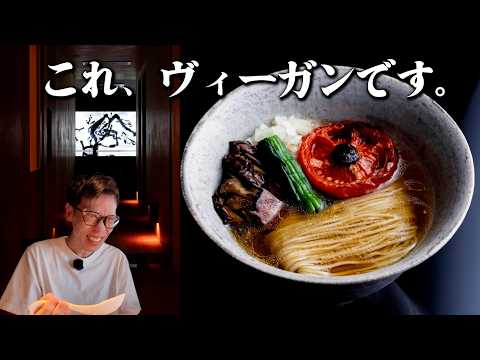
Finally, the main ramen arrives. I chose the 'Soy Sauce and Fermented Mugwort Liquid' ramen. The broth looks like a beautiful, clear shoyu soup, and one sip brings an intense wave of umami that makes me smile. Cold-brewed for 12 hours with Rausu kelp, domestic shiitake, and vegetables, the broth has a richness that makes it hard to believe no animal products were used. The noodles are made from Hokkaido wheat and organic whole wheat from Miyazaki. The charred aroma of the roasted maitake topping adds an edge to the broth, while the sharpness of the minced onions cleanses the palate. It is a supreme experience where the flavor evolves as you eat. Even after finishing the soup, it feels light and easy on the stomach.
A Chef's Perspective on Respecting Life
While enjoying the delicious ramen, I begin to share my deep thoughts as a chef. Through vegan cuisine, I felt a renewed sense of gratitude for 'receiving life' from ingredients. I passionately explain that preparing ingredients to taste their absolute best is the minimum courtesy we owe to the life given to us, and it is a chef's responsibility. Because of this, my personal rule is to always silently say 'itadakimasu' (I humbly receive this food) before entering the kitchen. Facing these flavors in this special space allowed us to not just eat, but to reflect on the preciousness of life behind our food. My friend listens intently to this earnest discussion.
Incredibly Smooth Kinako Ice Cream
The dessert that concludes the course is 'Kinako Ice Cream.' It is beautifully presented with kuromitsu (brown sugar syrup) and coconut milk sauces. Scooping it with a spoon, I am amazed by its smooth, gelato-like texture. With absolutely no ice crystals, it melts incredibly creamily in the mouth, and the combination of kuromitsu and kinako makes it taste like a luxurious 'warabi mochi.' I am deeply moved that such a rich and perfect dessert can be made without any dairy or eggs. At the end, Chef Kataoka, the owner, comes by to greet us, bringing a highly satisfying course to a close. This is a wonderful restaurant you must visit when in Kyoto.
About ガンガンの料理塾
ガンガンの料理塾
12.9万人 subscribers ・ 洋食/イタリアン/家庭料理
* Opens YouTube channel
* Subscriber count is as of article creation and may differ from the current number.
