

Recipe
Pork Belly Comparison: Frozen, Chilled, White Pork, and Black Pork—Which is Best?
Ingredients
- Porkbelly (choose from frozen, chilled, white pork, or black pork) 1 kg x 4 types
- Sobanoodle soup base (tsuyu) as needed
- Sugaras needed
- Colaas needed
- Garlicto taste
- Gingerto taste
- Greenonions to taste
- Vegetableoil a splash
- Water(for parboiling) as needed
About "Sous Vide Pork Belly Kakuni (Braised Pork Belly)"
We thoroughly compare the taste and texture of 4 types of pork belly (frozen, chilled, white pork, and black pork) from different distribution channels and breeds, cooked using the exact same method. This kakuni (braised pork belly) is parboiled to remove excess fat and scum, then cooked sous vide at 90°C (194°F) for 9 hours to achieve ultimate tenderness. A key step is carefully wiping away excess fat during searing to bring out a savory aroma and beautiful glaze. Ultimately, the white pork has the creamiest fat, while the black pork boasts a strong, savory meat flavor, highlighting their distinct characteristics.
Tips for Making "Sous Vide Pork Belly Kakuni (Braised Pork Belly)"
-
Prep
- Parboil until the surface turns white, then cool in ice water to wash away excess fat and scum. This is a crucial step to eliminate off-flavors.
-
Choosing the Cut
- Since the upper section of pork belly is very fatty and the lower section tapers off, use the most balanced 'middle' section for a fair comparison.
-
Heat Control
- Slowly cooking in a steam convection oven at a low temperature of 90°C (194°F) for 9 hours keeps the meat moist while making it incredibly tender.
-
Searing
- Cool thoroughly after cooking before slicing, and start searing from a cold pan. Wipe away excess fat with paper towels during cooking to prevent greasiness and bring out a fragrant sear.
-
Seasoning
- Use a special sauce combining soba noodle soup base, sugar, and cola. The cola helps tenderize the meat.
Ingredients for "Sous Vide Pork Belly Kakuni (Braised Pork Belly)"
9 items* Tap ingredient names to find on Amazon
How to Make "Sous Vide Pork Belly Kakuni (Braised Pork Belly)"
- 1
Cutting and Inspecting the Pork Belly
Cut each of the 4 types of pork belly and inspect their cross-sections. The frozen pork belly releases a lot of drip, while the chilled pork belly has no drip and looks pristine. The black pork belly is characterized by its deep red color and high meat density.
- 2
Preparing the Special Sauce
Combine the soba noodle soup base, sugar, and cola by eye to make the special sauce. Cola helps tenderize the meat. Prepare the garlic, ginger, and green onions at the same time.
- 3
Parboiling (Blanching)
Briefly parboil the pork belly in boiling water until the surface turns white. Immediately transfer to ice water to cool, then wash away excess fat and scum. This crucial step removes any gamey odor and ensures a clean, refined flavor in the final dish.
- 4
Preparing the Vacuum Pack
Place the parboiled meat into a bag along with the aromatics (garlic, ginger, and green onions). Pour in 100 cc of the special sauce per 1 kg of meat. Use a vacuum sealer to completely remove the air from the bag.
- 5
Sous Vide Cooking
Place in a steam convection oven and cook slowly at 90°C (194°F) for 9 hours. This low-temperature cooking retains the meat's moisture while making it incredibly tender. Once cooked, let it cool completely to allow the flavors to settle.
- 6
Searing the Pork
Remove the cooled meat from the bag and cut into thick slices. Place garlic and a small amount of vegetable oil in a cold pan, arrange the pork slices, and start heating. As the pork releases its fat, carefully wipe it away with paper towels.
- 7
Glazing with Sauce
Once browned, pour back a little of the cooking juices left in the bag. Add more of the rich sauce, coat the pork thoroughly to glaze it, and serve.
Food Science
Combining the umami-rich inosinate in pork with the glutamate in soba noodle soup base creates an umami synergy, resulting in a deep, rich flavor. Additionally, using cola increases the meat's water-holding capacity due to its acidity (low pH), preventing the proteins from toughening and keeping the meat tender. Furthermore, heating converts the collagen in the meat into gelatin, transforming it into a juicy and tender texture.
Detailed Commentary on "Sous Vide Pork Belly Kakuni (Braised Pork Belly)"
* Content organized by topics from the video.
Introducing the 4 Types of Pork Belly
In this video, we prepare 4 types of pork belly from different distribution channels and breeds to test their flavor. Our lineup includes frozen pork belly, Mexican chilled pork belly, Saitama-grown white pork belly, and Hokkaido-grown black pork belly. First, we cut each block of meat to inspect the cross-sections and differences in meat quality. The white pork was thawed and butchered under refrigeration, while the black pork is characterized by its high density and deep red meat. To bring out the unique qualities of these 4 types, we cook them using the exact same method and thoroughly compare their taste and texture.
Drip Comparison and Pork Belly Cuts
We line up the cut meat to compare their conditions. The slowly thawed frozen pork belly already shows a lot of drip loss upon cutting. In contrast, the chilled pork belly has no drip at all and looks incredibly clean. Here, we explain the different sections of pork belly. The upper section (kami) is packed with fat, while the lower section (shimo) tapers off. To ensure a fair comparison, we use the most balanced 'middle' section. Additionally, the black pork belly has a striking appearance with a unique redness and wild look that almost resembles wild boar meat.
Special Sauce and Careful Parboiling
As the first step of cooking, we prepare a special sauce for seasoning. In a pot, we combine soba noodle soup base, sugar, and cola (which helps tenderize the meat) by eye. Since we are cooking the meat sealed in a bag, gamey odors can easily get trapped. Therefore, we briefly parboil the meat in boiling water until the surface turns white, then immediately plunge it into ice water to wash away excess fat and scum. This extra step is crucial for removing any off-flavors. We also prepare garlic, ginger, and green onions as aromatics.
Vacuum Sealing and Slow Sous Vide Cooking
Place the parboiled meat into individual bags along with the aromatics. Pour in 100 cc of the special sauce per 1 kg of meat. Once the sauce is distributed, use a vacuum sealer to completely remove the air from the bags. Place them in a steam convection oven and cook slowly at a low temperature of 90°C (194°F) for 9 hours. This sous vide method keeps the meat incredibly moist while making it tender to the limit. After cooking, let it cool completely to allow the flavors to settle.
Searing and Glazing the Pork
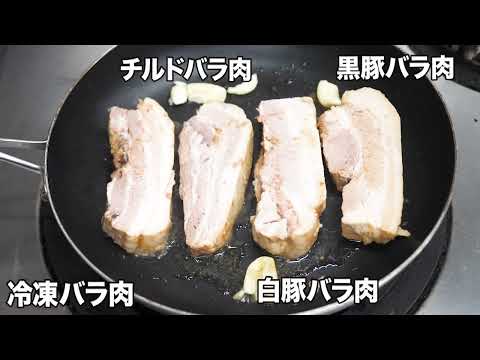
Remove the thoroughly cooled meat from the bags and cut into thick slices. Place garlic and a small amount of vegetable oil in a cold pan, arrange the pork, and start searing. As the pork releases a large amount of fat, carefully wipe away the excess with paper towels. This keeps the dish from becoming greasy while allowing the surface to develop a fragrant sear. Once browned, pour back a little of the cooking juices from the bag, add a richer sauce, coat the meat thoroughly to glaze it, and serve.
The Ultimate Taste Test of 4 Pork Bellies
Finally, it's time for the taste test. While the frozen pork belly is tender, the lean meat remains slightly tough, giving it a retort-pouch-like texture that feels a bit lacking for restaurant standards. The chilled pork belly is much softer overall compared to the frozen one, with a far superior fat-melting texture. The white pork belly from Saitama is the absolute best, with incredibly creamy, mild fat and a rich depth of flavor. The black pork belly from Hokkaido has a firm, springy texture in the lean meat and a strong, savory pork flavor. For making kakuni, the white pork is the most suitable because its delicious fat truly shines, making it the speaker's top favorite.
About 花いち クッキング

花いち クッキング
10.8万人 subscribers ・ 不明
* Opens YouTube channel
* Subscriber count is as of article creation and may differ from the current number.
