

Recipe
[Trending Whale Meat] Tail Meat Sashimi and Red Meat Tatsuta-age & Tatsuta-yaki #126
Ingredients
- Whaletail meat (Onomi), to taste
- Whalered meat, to taste
- Mirin,6 parts (for marinade)
- Darksoy sauce, 4 parts (for marinade)
- Gratedgarlic, to taste
- Gratedginger, to taste
- Tosasoy sauce (for sashimi), to taste
- Slicedbread, to taste (for Tatsuta-yaki sandwich)
- Riceflour, to taste
- All-purposeflour, to taste
- Fryingoil, to taste
- Sudachicitrus, to taste
- Daikonradish (for garnish/tsuma), to taste
About "Whale Tail Meat Sashimi and Red Meat Tatsuta-age & Tatsuta-yaki"
Introducing three dishes using whale tail meat (Onomi) and red meat. Tail meat is an ultra-rare cut featuring fine marbling that surpasses fatty tuna, served here as sashimi. The red meat is marinated in a golden ratio of 6 parts mirin to 4 parts dark soy sauce and prepared as Tatsuta-yaki (pan-fried) and Tatsuta-age (deep-fried). The secret to keeping it juicy is residual heat cooking and avoiding overcooking.
Tips for Making "Whale Tail Meat Sashimi and Red Meat Tatsuta-age & Tatsuta-yaki"
-
Prep
- Since the tail meat is for sashimi, carefully wipe off any excess moisture with paper towels.
-
Seasoning
- For the red meat marinade, use a golden ratio of 6 parts mirin to 4 parts dark soy sauce with plenty of garlic and ginger. Marinate for 5 to 6 minutes to eliminate any gamey odor.
-
Heat control
- For Tatsuta-yaki and Tatsuta-age, sear or fry the surface quickly over high heat, then immediately turn off the heat and let the residual heat cook it through. Overcooking will make the whale meat tough.
-
Coating
- Blending equal parts of rice flour and all-purpose flour for the Tatsuta-age coating yields a wonderfully crispy texture.
-
Temperature
- Deep-fry the Tatsuta-age in oil heated to 170°C (340°F).
Ingredients for "Whale Tail Meat Sashimi and Red Meat Tatsuta-age & Tatsuta-yaki"
13 items* Tap ingredient names to find on Amazon
- Whaletail meat (Onomi), to taste
- Whalered meat, to taste
- Mirin,6 parts (for marinade)
- Darksoy sauce, 4 parts (for marinade)
- Gratedgarlic, to taste
- Gratedginger, to taste
- Tosasoy sauce (for sashimi), to taste
- Slicedbread, to taste (for Tatsuta-yaki sandwich)
- Riceflour, to taste
- All-purposeflour, to taste
- Fryingoil, to taste
- Sudachicitrus, to taste
- Daikonradish (for garnish/tsuma), to taste
How to Make "Whale Tail Meat Sashimi and Red Meat Tatsuta-age & Tatsuta-yaki"
- 1
[Whale Tail Meat Sashimi]
- 2
Prep the tail meat
Carefully wipe off any excess moisture from the whale tail meat with paper towels, then slice the beautifully marbled meat using your favorite knife.
- 3
Plate the sashimi
Beautifully arrange the sashimi slices on top of the shredded daikon radish on a plate, and serve with grated garlic and grated ginger as condiments.
- 4
Finish with Tosa soy sauce
Serve with Tosa soy sauce to complement and elevate the rich fat and umami of the tail meat.
- 5
[Whale Red Meat Tatsuta-yaki]
- 6
Make the mirin-soy marinade
Combine mirin and dark soy sauce in a golden ratio of 6:4, then add plenty of grated garlic and grated ginger.
- 7
Marinate the red meat
Add the bite-sized pieces of red meat to the special mirin-soy marinade and let it soak for 5 to 6 minutes.
- 8
Sear the red meat
Heat a small amount of oil in a pan and add the marinated red meat over high heat. Sear the surface quickly, then immediately turn off the heat and let the residual heat cook it through gently.
- 9
Assemble the Tatsuta-yaki sandwich
Quickly deep-fry small pieces of sliced bread in oil, then sandwich the cooked red meat between them. The meat stays tender even when cold, matching perfectly with the crispy bread.
- 10
[Whale Red Meat Tatsuta-age]
- 11
Marinate the red meat
Add the bite-sized pieces of red meat to the special mirin-soy marinade and let it soak for 5 to 6 minutes.
- 12
Prepare the flour blend
Prepare a special coating by blending equal parts of rice flour and all-purpose flour. This is the secret to achieving a crispy texture.
- 13
Coat the red meat
Remove the red meat from the marinade, lightly shake off excess liquid, and coat the surface thinly and evenly with the flour blend.
- 14
Deep-fry in oil
Deep-fry in oil heated to 170°C (340°F) until crispy. Remove immediately once the exterior is crispy. Be careful not to over-fry.
Food Science
The combination of inosinate, which is abundant in whale meat, and glutamate found in soy sauce creates a powerful synergistic umami effect. Additionally, during the cooking process of Tatsuta-age and Tatsuta-yaki, the Maillard reaction—occurring between the sugars in the seasonings and the amino acids in the meat—enhances the savory, aromatic flavor. Furthermore, the acidity of the sudachi citrus helps neutralize any gamey odors and brightens the overall flavor profile of the dishes.
Detailed Commentary on "Whale Tail Meat Sashimi and Red Meat Tatsuta-age & Tatsuta-yaki"
* Content organized by topics from the video.
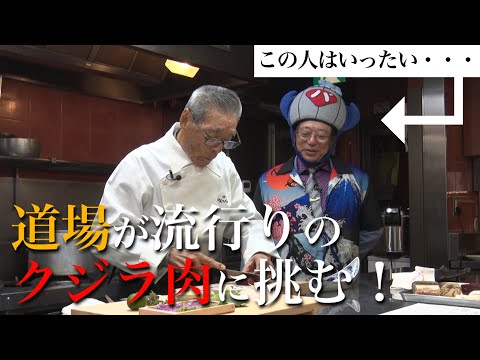
Special Guest & the New Whaling Ship Kangei Maru
A unique guest dressed head-to-toe like a whale joins Iron Chef Rokusaburo Michiba. It is Hideki Tokoro, president of Kyodo Senpaku, a leader in Japanese whaling. President Tokoro passionately discusses the state-of-the-art mother ship Kangei Maru, launched in March 2024. This massive vessel boasts a gross tonnage of 9,299 tons, a length of 112.6 meters, and a width of 21 meters. Its key feature is an electric propulsion system powered by four generators and two motors, replacing traditional large engines. This design lowers the ship's internal height and flattens the slipway slope, allowing larger whales to be pulled up smoothly and processed quickly on board.
Whale Food Culture and Rare Cuts
Michiba reminisces about his youth when cuts like Onomi (tail meat), Kawa-kujira (skin), and Obake (tail fin) were common in restaurants. Obake, thinly sliced and tossed in vinegared miso, was even enjoyed at home during celebrations. On the table are today's rare cuts: premium marbled Onomi, deep red red meat, Saezuri (tongue), and intestines as thick as a human arm. The tongue is fattier, more tender, and richer in flavor than beef tongue. President Tokoro shares his passion for introducing the deliciousness of whale to younger generations to preserve this culinary heritage.
Today's Menu and a Creative Octopus Alternative
Michiba elegantly brushes today's menu: Onomi Sashimi, Red Meat Tatsuta-age & Tatsuta-yaki, Obake in White Miso, Saezuri Salad, and Intestines with Mustard Miso (Nuta)—a luxurious all-whale feast. In the kitchen, another guest, Jun Kuroda from T.O. Shokken, is introduced. To address the global shortage and soaring prices of octopus, Kuroda proposes "Whale Takoyaki" using whale tongue, sausage, and canned Yamato-ni (sweet soy-stewed whale). The Iron Chef is highly intrigued by this innovative idea to substitute octopus with whale for home takoyaki parties.
Premium Tail Meat Surpassing Fatty Tuna
The first dish is sashimi made from Onomi (tail meat), the most premium cut of whale. Located from the dorsal fin to the base of the tail, this muscle gets intense exercise, resulting in exquisite marbling. It is incredibly rare, accounting for only 1/2000th of the whale's total weight, and can fetch over 20,000 to 30,000 yen per kilogram. After patting off excess moisture, Michiba uses his signature "Roku-to" knife to slice the beautifully marbled meat. He arranges it over shredded daikon radish, serving it with grated garlic and grated ginger. Pairing it with Tosa soy sauce maximizes the rich fat and deep umami.
Secret Mirin-Soy Marinade for Red Meat
Next is the preparation of red meat, a classic cut from the back, belly, or chest. It has little gristle, is reasonably priced, and is easy to handle. Michiba shares a poetic story about how Tatsuta-age gets its name from the autumn leaves of the Tatsuta River in Nara. For the marinade, he uses his signature "mirin-soy" sauce, combining mirin and dark soy sauce in a 6:4 golden ratio with plenty of grated garlic and grated ginger. Marinating the bite-sized red meat in this special sauce for 5 to 6 minutes is crucial for removing any gamey odor and unlocking the meat's deep flavor.
Tender Tatsuta-yaki via Residual Heat
Using the marinated red meat, Michiba first prepares Tatsuta-yaki. He heats a small amount of oil in a pan and adds the meat. The ultimate secret he shares is not to overcook it. After searing the surface quickly over high heat, he immediately turns off the flame and lets the residual heat cook it through. This keeps the meat incredibly juicy and tender. Michiba then suggests a "Tatsuta-yaki Sandwich" by lightly frying small pieces of sliced bread and sandwiching the seared meat. President Tokoro is thrilled by this novel idea, which beautifully fuses Japanese technique with Western ingredients.
Crispy Tatsuta-age and Its Health Benefits
Next, the remaining red meat is used for the classic Tatsuta-age. After lightly draining the marinade, the meat is coated. Michiba's secret is using a special 50:50 blend of rice flour and all-purpose flour. He coats the meat thinly and evenly, then deep-fries it in oil heated to 170°C (340°F). Again, avoiding over-frying is key; remove it as soon as the outside is crispy. Meanwhile, President Tokoro explains the benefits of balenine, a powerful fatigue-recovery compound abundant in whale meat. It enables whales to swim thousands of kilometers without eating, and is studied for human fatigue recovery, dementia prevention, and anti-depressant effects.
Tasting: Melting Tail Meat & Juicy Tatsuta
Finally, it's time to taste. They start with the Onomi sashimi. The moment they dip it in soy sauce and eat, everyone exclaims in delight. The finely marbled fat melts instantly, spreading an elegant flavor that surpasses even fatty tuna. Next, they try the Tatsuta-age and Tatsuta-yaki. The residual-heat-cooked Tatsuta-yaki is incredibly tender and juicy. The Tatsuta-yaki Sandwich made with fried bread is a masterpiece, offering a perfect contrast of crispy bread and tender meat that stays soft even when cold. Praised as a flavor kids would love, the feast showcases the endless potential of whale meat and the Iron Chef's mastery.
About 鉄人の台所

鉄人の台所
21.2万人 subscribers ・ 和食・家庭料理
* Opens YouTube channel
* Subscriber count is as of article creation and may differ from the current number.
