

Recipe
Is 'Safe in the Fridge' a Myth? The Shocking Reason Fish Spoils Faster Than You Think
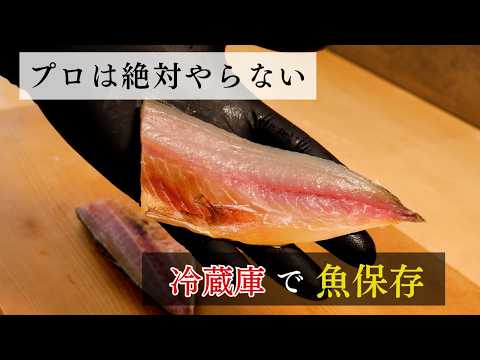
Ingredients
- 1horse mackerel
- Ice,to taste
- Water,to taste
- Salt,to taste
- Papertowels, to taste
- Plasticwrap, to taste
- Painter'stape, to taste
- 1-2ice packs
About "Preserving Horse Mackerel Freshness and Preparing Sashimi"
While horse mackerel spoils in the fridge after 6 days, this video demonstrates how a hybrid preservation method combining ice-salt water and vacuum packing maintains professional-grade freshness. It covers the entire process from prep work like removing the gills and innards and cutting off the fins, to filleting into three pieces and skinning. A taste test proves how a single storage method can drastically change the taste and quality.
Introduction to 蒼の鮨 sushi-chef ao →
Tips for Making "Preserving Horse Mackerel Freshness and Preparing Sashimi"
-
Prep
- Cleanly remove the gills and innards of the horse mackerel with a knife, and wash the inside of the cavity to rinse away the bloodline. It is crucial to remove them thoroughly, as remaining innards accelerate decay.
-
Prep
- Cut off the fins and tail with shears. This is essential to prevent the hard fins from puncturing the bag during long-term storage.
-
Prep
- Stuff paper towels inside the cavity and around the belly, then wrap the entire fish tightly with plastic wrap. Write the storage start date on painter's tape and stick it on.
-
Storage Method
- Ice-salt water storage: Create a cooling environment by putting ice, water, and salt in a cooler box, and submerge the horse mackerel. Place ice packs on top as weights to keep it submerged during storage.
-
Storage Method
- Vacuum pack hack: If you don't have a machine, insert a straw into the bag and suck the air out with your mouth. This easily creates a vacuum state.
-
Cooking
- The horse mackerel stored in ice-salt water maintains pink, translucent flesh even after 6 days. In contrast, the fridge-stored fish develops a rotting odor, cloudy white flesh, and yellow discoloration over the same period.
-
Cooking
- After filleting into three pieces, the ice-salt water-stored fish allows for smooth bone removal and skinning with no discoloration. It retains high enough quality to be thoroughly enjoyed as sashimi.
Ingredients for "Preserving Horse Mackerel Freshness and Preparing Sashimi"
8 items* Tap ingredient names to find on Amazon
How to Make "Preserving Horse Mackerel Freshness and Preparing Sashimi"
- 1
Cleanly remove the gills and innards of the horse mackerel using a knife.
- 2
Wash the inside of the cavity with water to thoroughly rinse away the bloodline and any residue.
- 3
Thoroughly wipe off any moisture.
- 4
Cut off the fins and tail using kitchen shears.
- 5
Stuff paper towels tightly inside the cavity and wrap them around the belly of the horse mackerel.
- 6
Wrap the entire fish tightly with plastic wrap.
- 7
Write the date on painter's tape and stick it on.
- 8
For the horse mackerel to be stored in ice-salt water, place it in a bag, insert a straw, and suck the air out with your mouth to create a vacuum seal.
- 9
For ice-salt water storage: Place ice, water, and salt in a cooler box, and submerge the horse mackerel. Place ice packs on top as weights and store for 6 days.
- 10
For fridge storage: Place in the vacuum chilled compartment and store for 6 days.
- 11
After 6 days, take out the horse mackerel stored in ice-salt water and remove the paper towels.
- 12
Cut off the head and fillet it into three pieces.
- 13
Remove the bones using fish tweezers.
- 14
Peel off the skin.
- 15
Check if it is suitable to be eaten as sashimi.
Food Science
By removing the innards and bloodline of the horse mackerel and storing it at a low temperature while controlling moisture with paper towels, the fish's natural enzymatic reactions progress. This breaks down ATP into inosinate, an umami compound, thereby enhancing the flavor. Furthermore, thorough moisture control combined with vacuum and low-temperature management suppresses microbial growth and lipid oxidation, allowing the fish to age beautifully without damaging the flesh.
Detailed Commentary on "Preserving Horse Mackerel Freshness and Preparing Sashimi"
* Content organized by topics from the video.
Does Fish Get Smelly Quickly in the Fridge?
Have you ever experienced fish getting smelly quickly even though you kept it in the fridge? Actually, the problem isn't how you use your fridge, but rather putting the fish directly into the fridge in the first place. In this video, we will reveal a hybrid preservation method combining vacuum packing and ice-salt water, which is also practiced by professionals. We prepare two horse mackerels of similar size from the same origin, store one in the fridge and the other in ice-salt water for 6 days, and thoroughly compare the difference in freshness. We will introduce the secrets to dramatically preserving fish freshness in detail, starting from the prep work, so please check it out.
Careful Prep Work to Maintain Freshness
Before starting the experiment, we begin with the careful prep work of the horse mackerel. This initial step is extremely important to prevent the fish from spoiling. First, we cleanly remove the gills and innards of the horse mackerel using a knife. If the innards are left inside, they will cause decay, so removing them thoroughly is key. Once the innards are removed, wash the inside of the cavity with water to cleanly rinse away the bloodline and other residues. After wiping off the moisture thoroughly, we pre-cut the fins and tail with shears because they are hard and can puncture the bag during long-term storage. With this, the pre-storage preparation is complete.
Prep for Storage and a Vacuum Pack Hack
Once the prep work is done, we move on to preparing for storage. We tightly stuff standard paper towels inside the cavity and around the belly of the horse mackerel, then wrap the entire fish snugly with plastic wrap. To test the difference between the two storage methods, we wrap them under the exact same conditions. Since it's easy to forget when you stored it as time passes, it is important to write the date on painter's tape and stick it on. Next, for the horse mackerel to be stored in ice-salt water, we place it in a bag and remove the air to create a vacuum state. Here, we introduce a hack often used by sushi chefs: inserting a straw into the bag and sucking out the air inside with your mouth all at once. This is a convenient way to easily create a vacuum state without using a machine.
Storing for 6 Days Using Two Methods
We will store the two prepared horse mackerels in different environments for 6 days. One is placed in the fridge's vacuum chilled compartment, and the other is stored in ice-salt water. The ice-salt water is made by putting ice, water, and salt into a cooler box, and then submerging the horse mackerel in it. To prevent the fish from floating to the surface, the key is to place ice packs on top as weights to keep it fully submerged. In this state, we store them quietly for 6 days while keeping the temperature constant. What kind of difference in freshness will emerge between the two horse mackerels after 6 days?
Surprising Freshness After 6 Days
Now that 6 days have passed, we will first check the horse mackerel stored in ice-salt water. Taking it out of the bag and removing the paper towels, the belly area is not very dirty, and it has been kept in an extremely clean condition. We cut off the head and fillet it into three pieces, and it's exciting to see the quality of the flesh as the knife goes in. Once filleted, the flesh is pink and translucent, boasting an incredible beauty that makes it hard to believe 6 days have passed. Since aging has progressed and softened the flesh, removing the bones with fish tweezers is also very smooth. Even after peeling the skin, there is no discoloration in the flesh, leaving it in perfect condition.
A Strong Rotting Smell Fills the Room
Next, we check the horse mackerel stored in the fridge for 6 days. Even through the plastic wrap, you can see that the drip has heavily seeped into the paper towels. The moment the wrap is opened and we smell it, a strong rotting odor wafts out, making us instinctively say, 'Wow, no way, this is inedible.' With teary eyes, we proceed to fillet it into three pieces, but the edges of the belly have turned yellow, and the entire flesh has become cloudy and white. It is clear at a glance that degradation progresses much faster in the fridge than imagined. We also remove the bones and peel the skin in the same way to prepare for the taste test.
How Storage Changes Taste and Quality
Comparing the two types of filleted horse mackerel side by side, the difference is night and day. The fridge-stored fish has yellow discoloration along the edges of the flesh, while the ice-salt water-stored fish maintains a vibrant pink color. Let's do a taste test. First, the fridge-stored fish: the moment it enters the mouth, a fishy odor characteristic of blue-backed fish and a slightly sour taste spread, making it impossible to swallow. It is in a state that cannot be masked even with seasonings like soy sauce. On the other hand, the ice-salt water-stored fish has absolutely no odor, with concentrated umami, and is of high enough quality to be thoroughly enjoyed as sashimi. It is hard to hide our surprise at how much of a difference a single storage method can make.
About 蒼の鮨 sushi-chef ao

蒼の鮨 sushi-chef ao
3.2万人 subscribers ・ 和食/寿司
* Opens YouTube channel
* Subscriber count is as of article creation and may differ from the current number.
